Black Cloud, Red Fire: A Feast for a Stolen Cassock
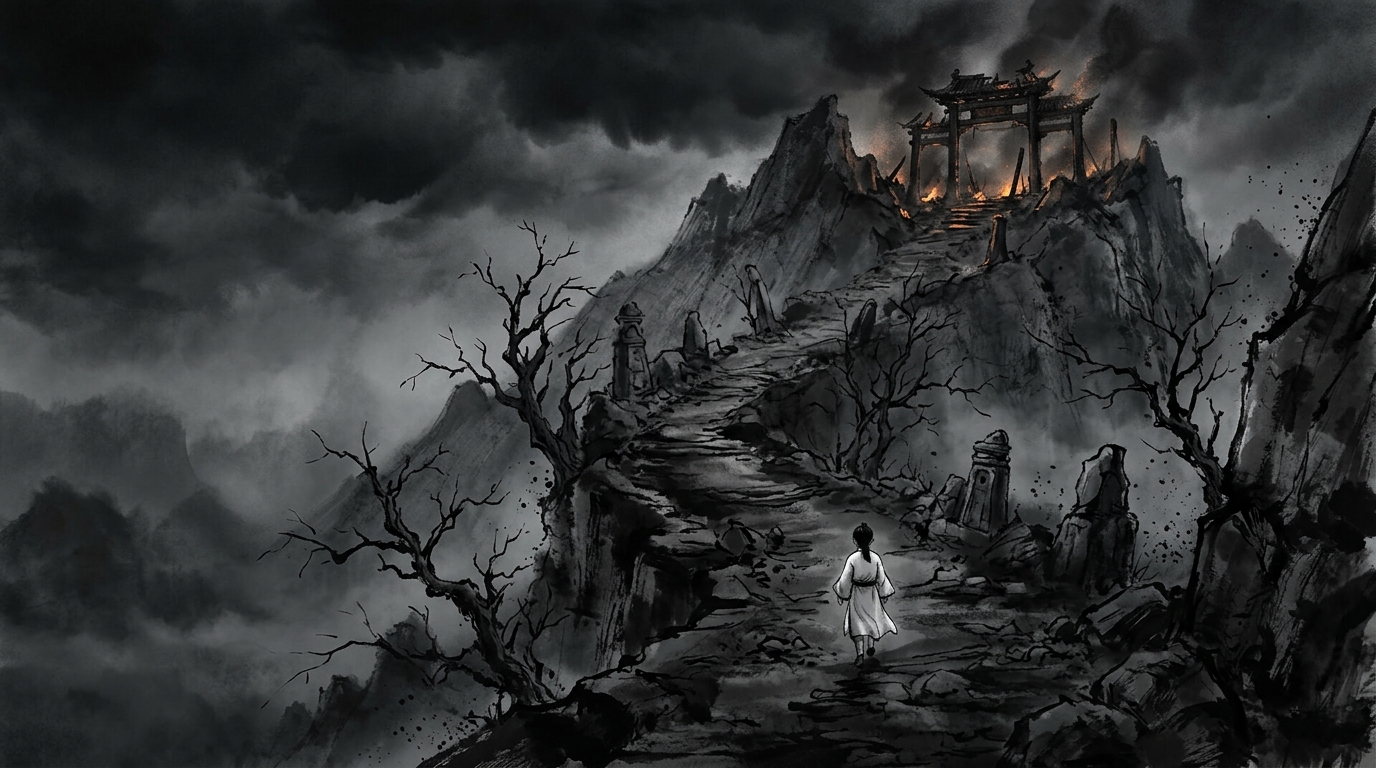
Black Myth: Wukong sends the Destined One up Black Wind Mountain — a charred Guanyin Temple, drifting ghosts, and a bear guai holding the peak. Journey to the West, chapter 16, replayed.
Updated
After the battle at the Mountain of Flowers and Fruit, the once-invincible monkey fell. Erlang Shen came down with the celestial host, and the Monkey King lost the last hard fight of his life.
But a monkey has six roots (六根): eye, ear, nose, tongue, body, mind. Roots do not die with the body. They scatter across the land as six relics, and the legend says that whoever gathers all six inherits the Great Sage’s mantle. Monsters and men take to the road chasing that prize — and such seekers are called the Destined (天命人).
The Destined One’s first stop is Black Wind Mountain (黑风山).
First Steps on Black Wind Mountain
The paths of the game’s first chapter run through two forests — the Forest of Grey Wolves, the Forest of Jade Bamboo (苍狼林、翠竹林). The deeper you go, the more ghosts drift between the charred trunks, until halfway up the slope a temple ruin pushes through the canopy: the Guanyin Temple (观音禅院).
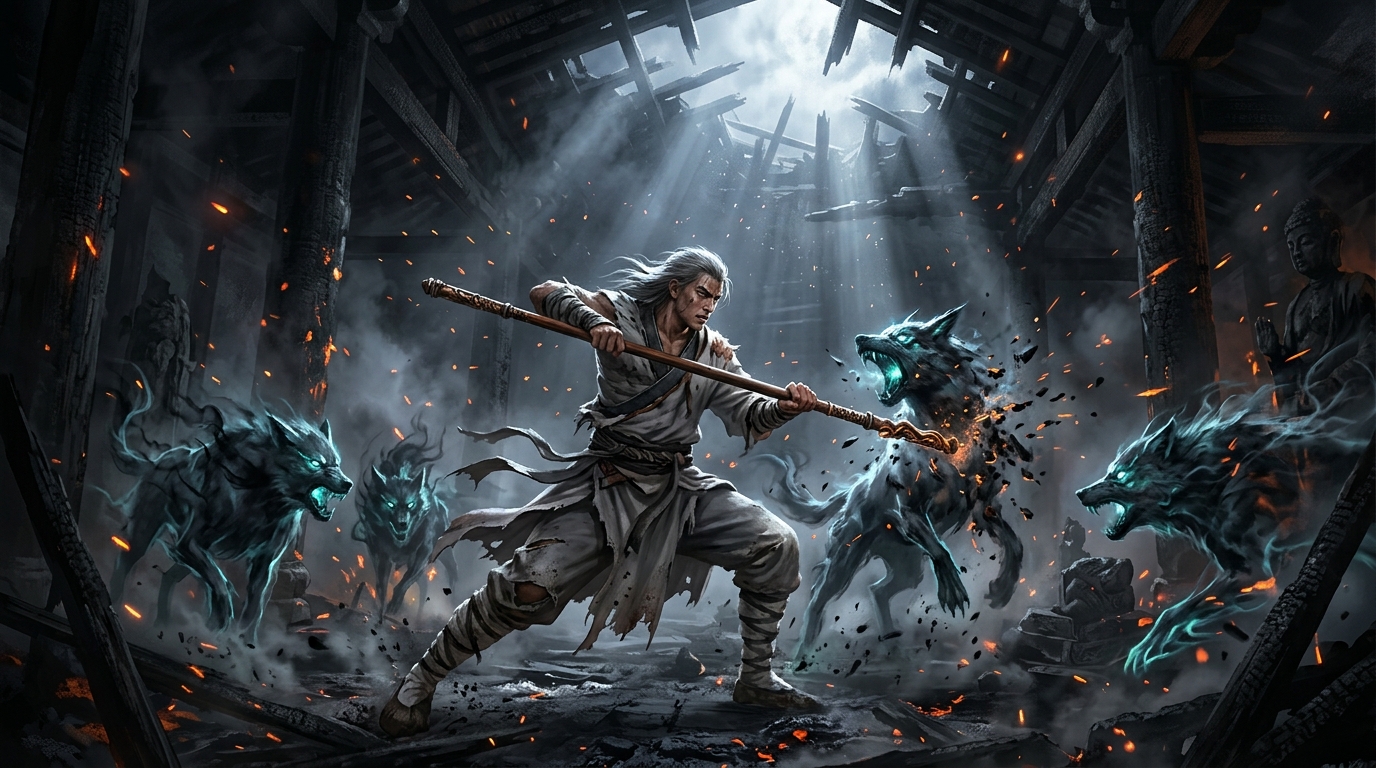
Its walls are scorched, its Buddhas gray with dust. In the game the temple has been burning for years, and three broken bells lie scattered about the mountain. Strike them, the game hints, and a figure walks out of the bell-sound — the temple’s old abbot, Elder Jinchi (金池长老).
The mountain itself has a lord: the King of Black Wind (黑风大王). Anyone fighting up to the summit will place him eventually. This guai is no nameless brute — in chapter 16 of Journey to the West, he steals the Tang Monk’s cassock.
Elder Jinchi and His Wall of Cassocks
The chapter-title couplet of chapter 16 lays this episode out flat:
The monks of the Guanyin Temple scheme for a treasure;
a monster of Black Wind Mountain steals the cassock.
Journey to the West, chapter 16 — chapter-title couplet
- jiāshā 袈裟
- A monk’s robe — the word came into Chinese from the Sanskrit kāṣāya. The Tang Monk’s brocade cassock is the treasure every hand in this chapter reaches for.
Chinese original
观音院僧谋宝贝 黑风山怪窃袈裟
Traveling west, the Tang Monk and his disciples ask for lodging at the Guanyin Temple. Its head, Elder Jinchi, comes out to receive them in person — a monk two hundred and seventy years into his practice, with a single passion: cassocks. He owns seven or eight hundred of them. Told that his guest is a holy monk from the Tang lands of the east, he has the whole collection hung up for display.
Wukong laughs from the sidelines: as it happens, our master owns a cassock too. When the brocade cassock (锦襕袈裟) shakes open, the whole room fills with light. Elder Jinchi looks at his seven hundred, and weeps — two hundred and seventy years of collecting, outdone by a traveler’s spare robe.
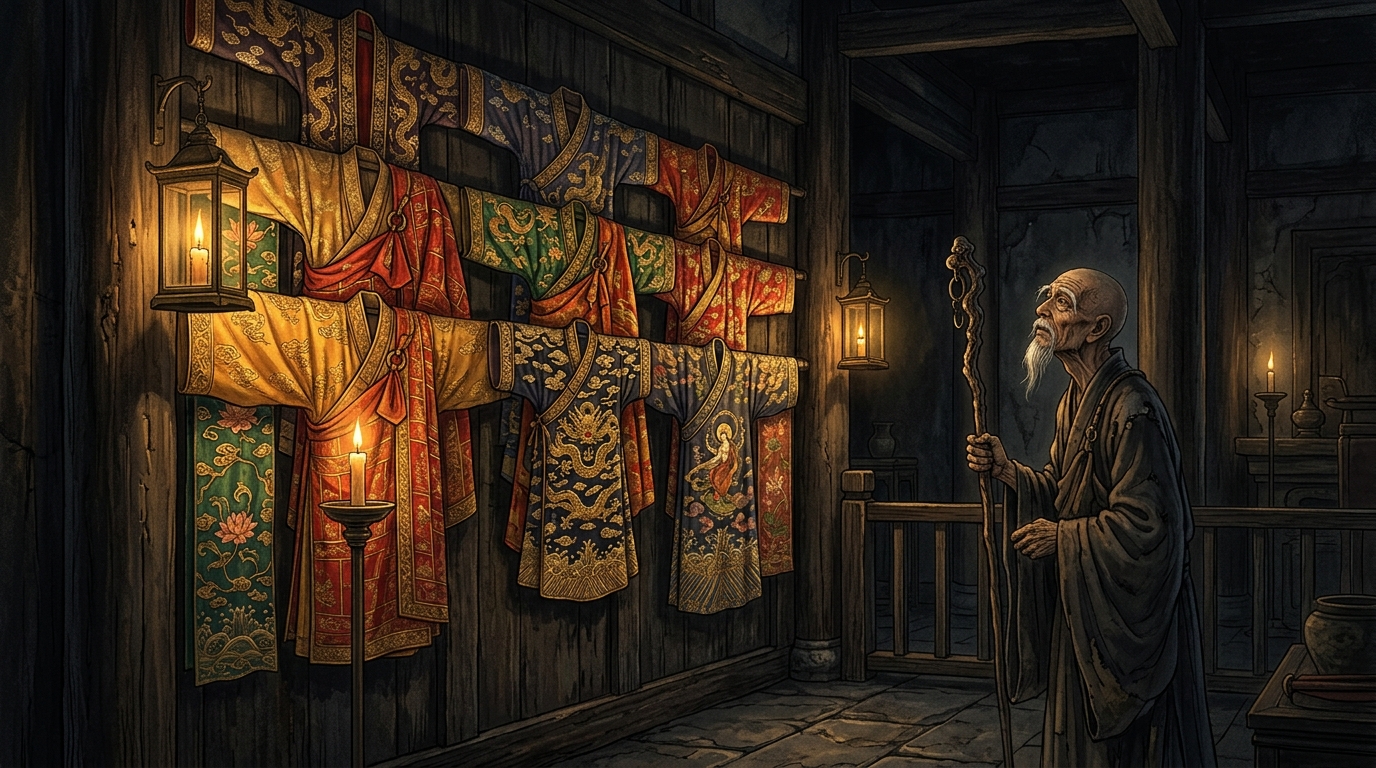
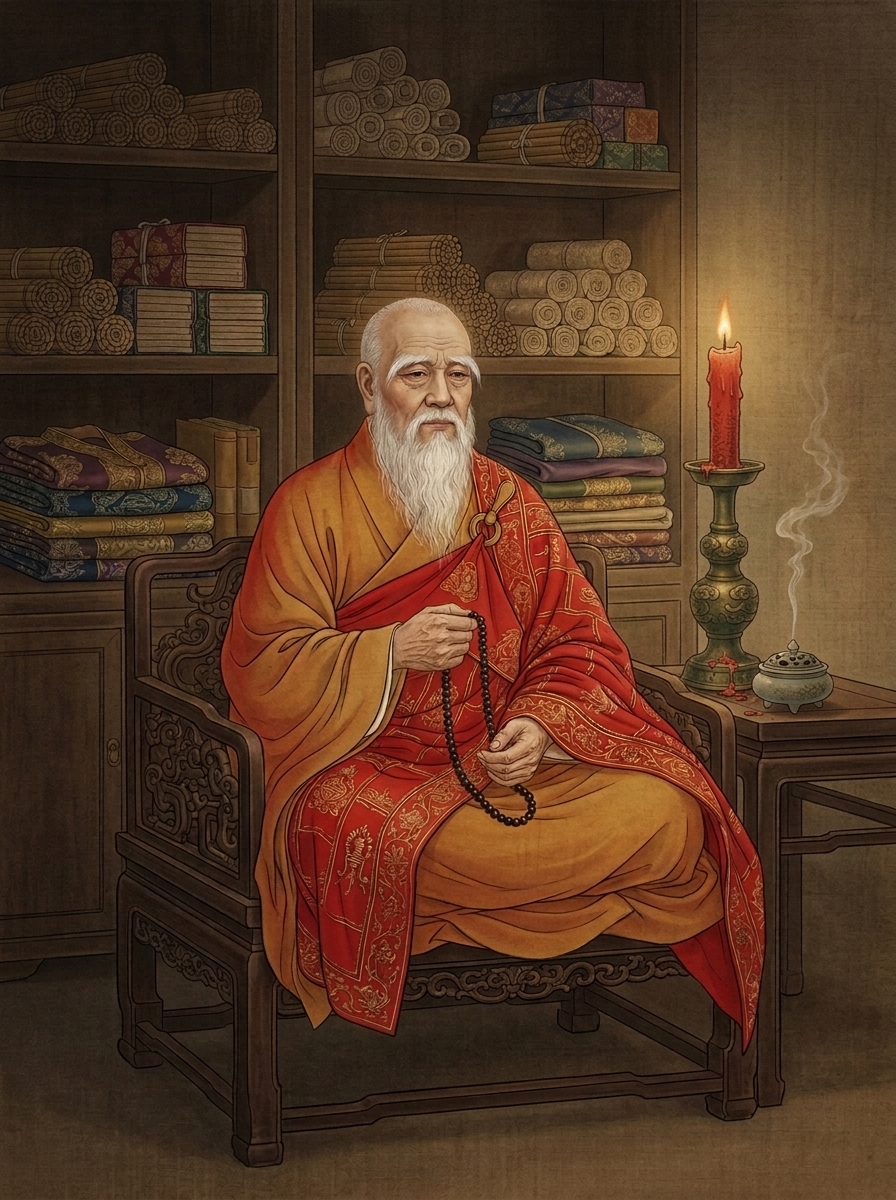
The old monk borrows the cassock and weeps over it in the back rooms. A disciple, Guangzhi (广智), creeps up with a plan: kill the travelers, bury them, and the cassock stays at the temple. The old monk is tempted. A second disciple, Guangmou (广谋), offers the ‘safer’ version — no blades: pile up firewood, burn it all down, call it an accident.
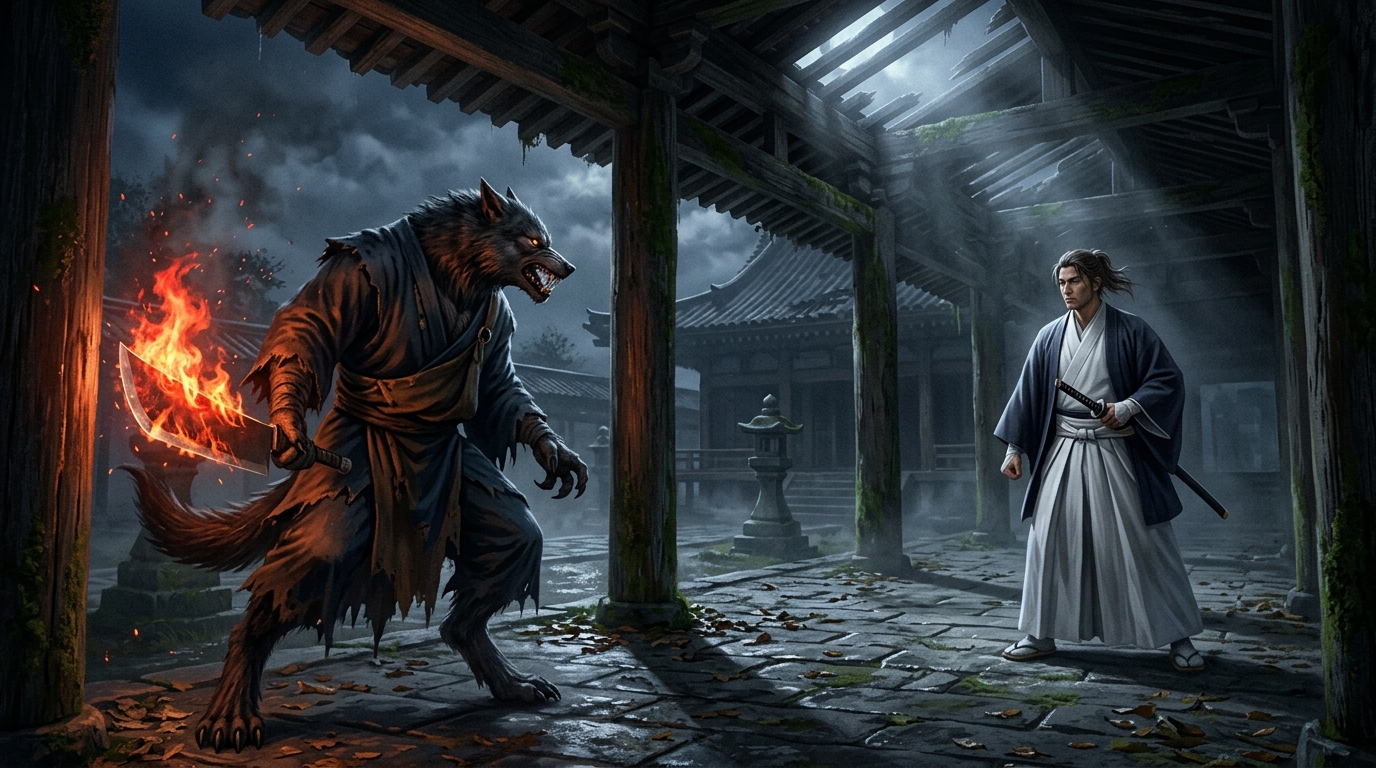
The Temple Burns
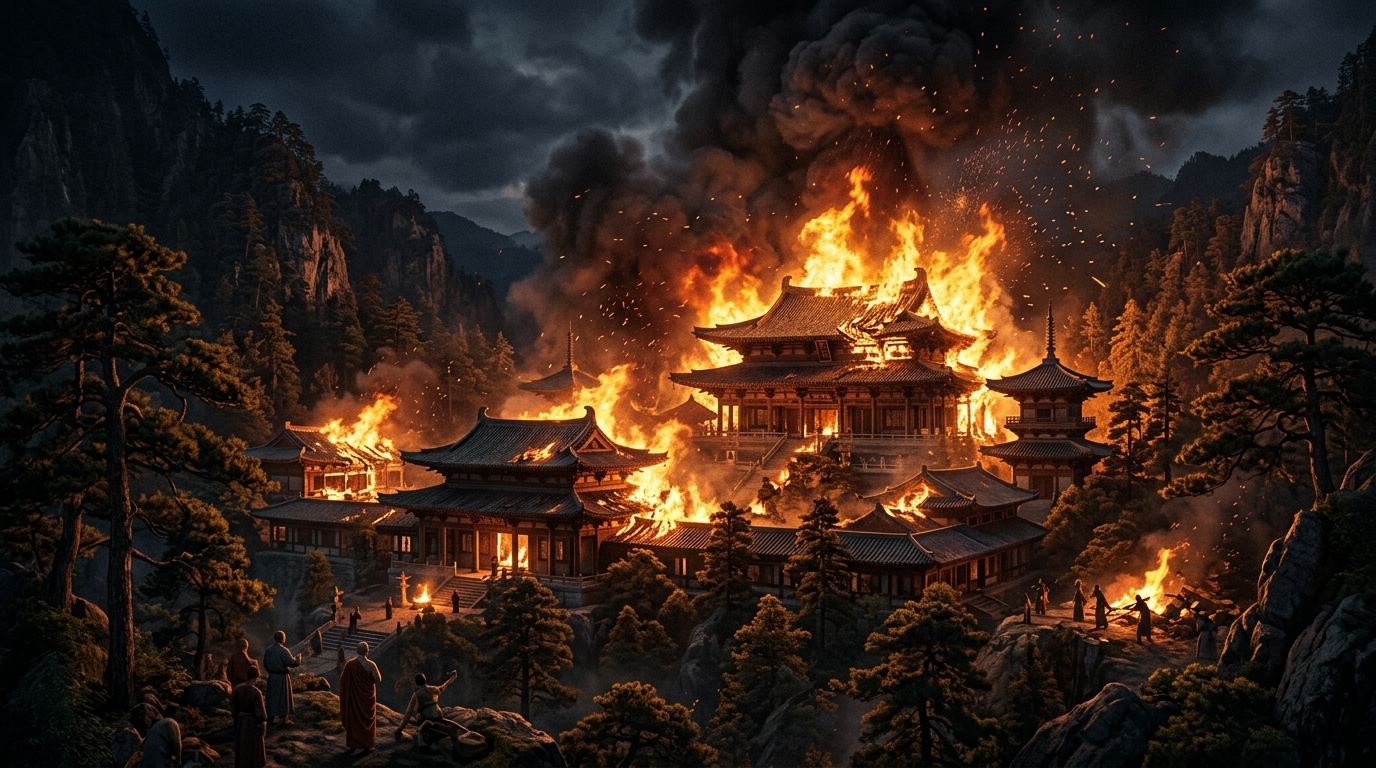
The Tang Monk is flesh; in a fire he dies. Wukong saw this fire coming. He flies up to heaven and borrows a fire-shielding cover (避火罩) from the Heavenly King Virūpākṣa (广目天王), sets it over the Tang Monk’s room, climbs onto the roof, and watches the blaze begin.
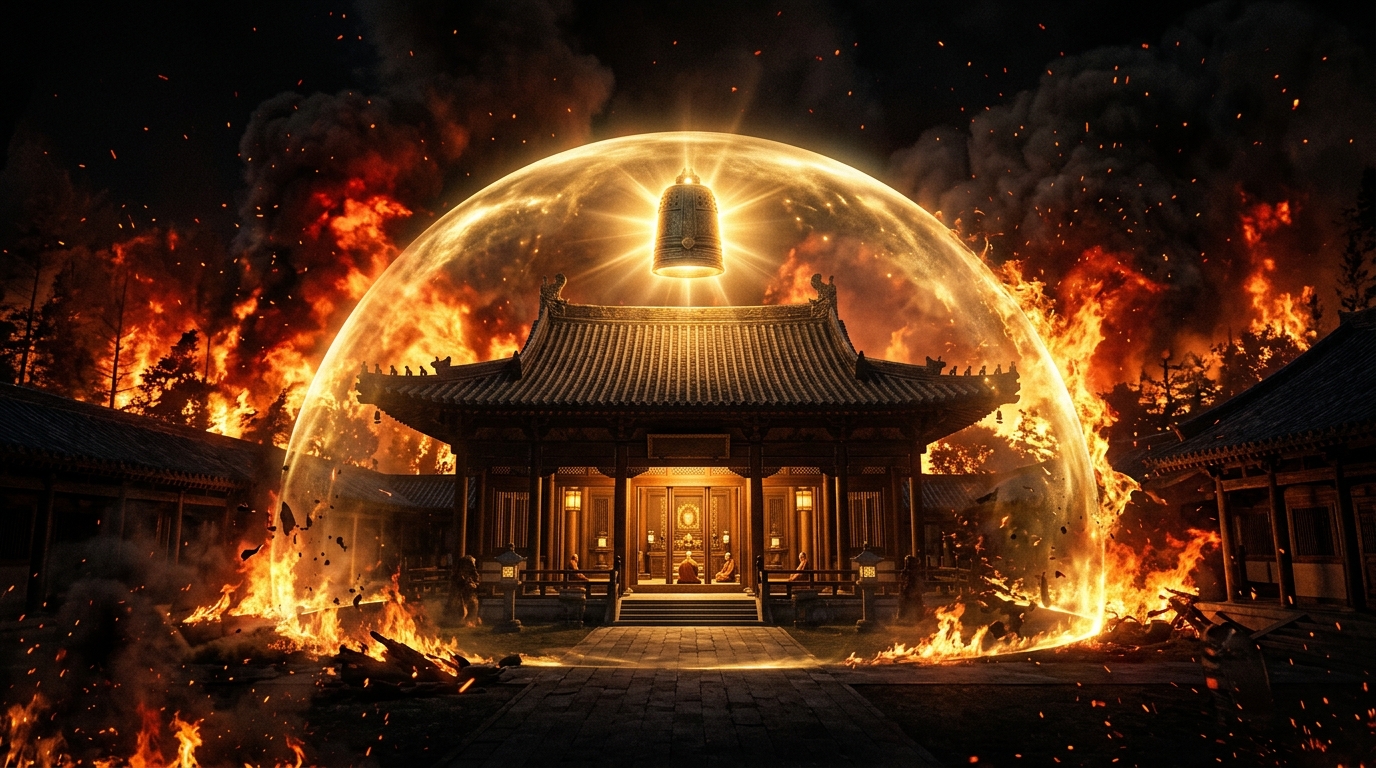
The fire lit for a cassock burns down the Guanyin Temple itself — the household that collected cassocks is the first it swallows.
The glow reaches Black Wind Mountain. The Black Bear Guai (黑熊精), lord of the mountain, sees the sky burning and rides a cloud over to look. One step into the abbot’s quarters and the brocade cassock blazes gold in the dark — whatever interest he had in the fire ends right there. He gathers up the cassock and slips back over the mountain in the dark.
By dawn the fire is out and the Guanyin Temple is scorched bare. The travelers are unharmed; the brocade cassock is gone. Elder Jinchi cannot recover it and cannot face a fire his own temple set. That night he dashes his head against the wall.
A Monster Steals the Cassock
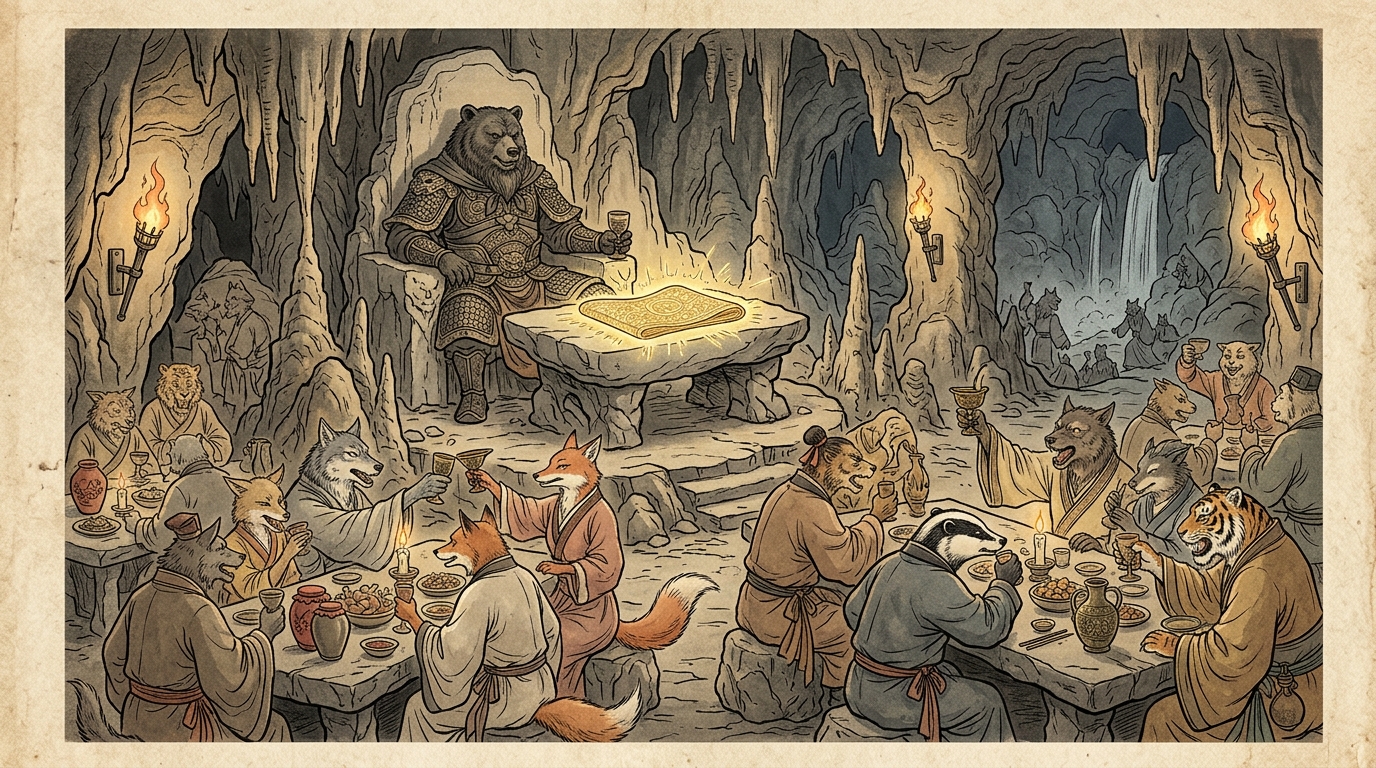
Wukong follows the cassock’s trail to Black Wind Mountain and catches three yaoguai (妖怪) in council at a cliff: the Black King has gained a treasure, and tomorrow is his birthday. He will hold a Buddha Robe Feast (佛衣会) and invite his friends to admire the robe and toast the day.
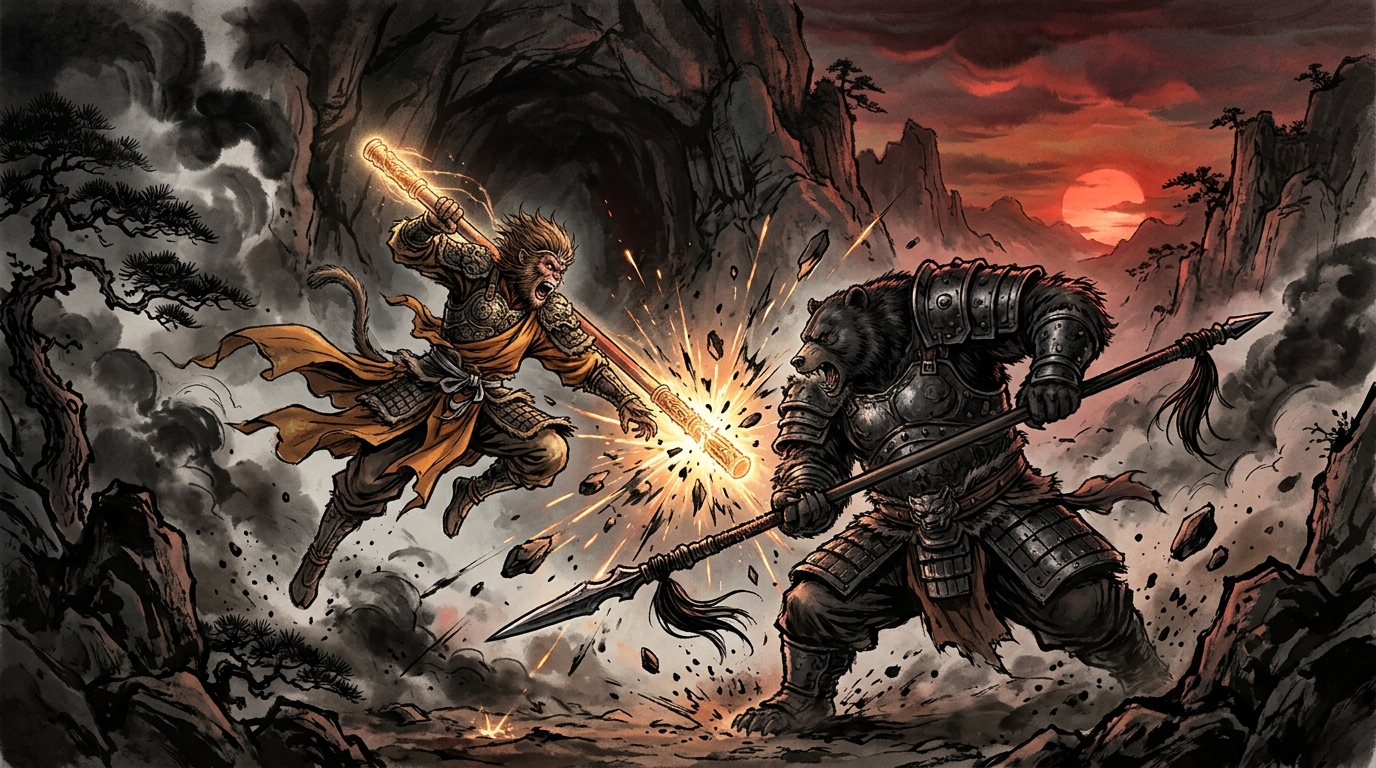
Wukong’s first blow cuts down the White-Robed Scholar, who reverts to his true form: a snake. Wukong snatches the invitation, takes the Scholar’s shape, and walks into the cave — where the bear sees through him at once. The running battle carries them from the cave mouth to a red sunset, no winner. The guai falls back behind his doors and will not come out.
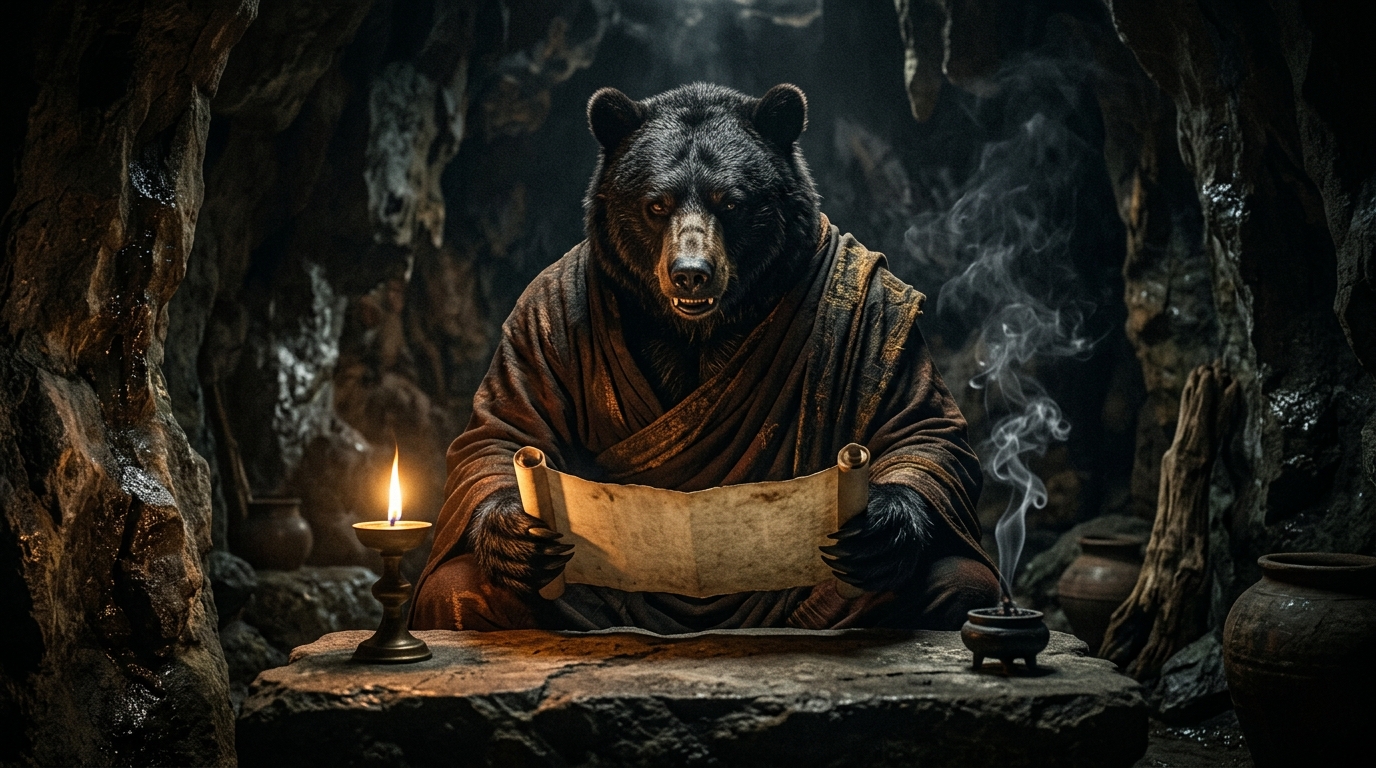
Among the monsters of Journey to the West, this one is an oddity. When other yaoguai catch the Tang Monk, they debate whether to steam him or boil him. The Black Bear Guai has no interest in the monk’s flesh. One cassock — and he prizes it above his life. The game fills in his history with the temple: bear and elder, keeper of a mountain and hoarder of robes, who once sat discussing scripture together. The disaster he goes on to cause is not about anyone’s flesh. It is about a cassock he cannot put down.
From Bear Guai to Guardian of the Mountain
With no winner in sight, Wukong goes south to the sea to fetch Guanyin.
Guanyin hears him out and comes back with him to Black Wind Mountain. She takes the form of Elder Lingxu (凌虚子) and has Wukong turn himself into a pill of immortal medicine, held out on a tray. The Black Bear Guai takes the tray and swallows the pill — and Sun Wukong goes to work inside him, punching, kicking, turning handsprings, until the king rolls on the ground begging.
Guanyin then casts the forbidding circlet (禁箍). It rings down over the guai’s head. The pain breaks him, and he converts. She carries him back to Mount Potalaka (落伽山) as Guardian of the Mountain.
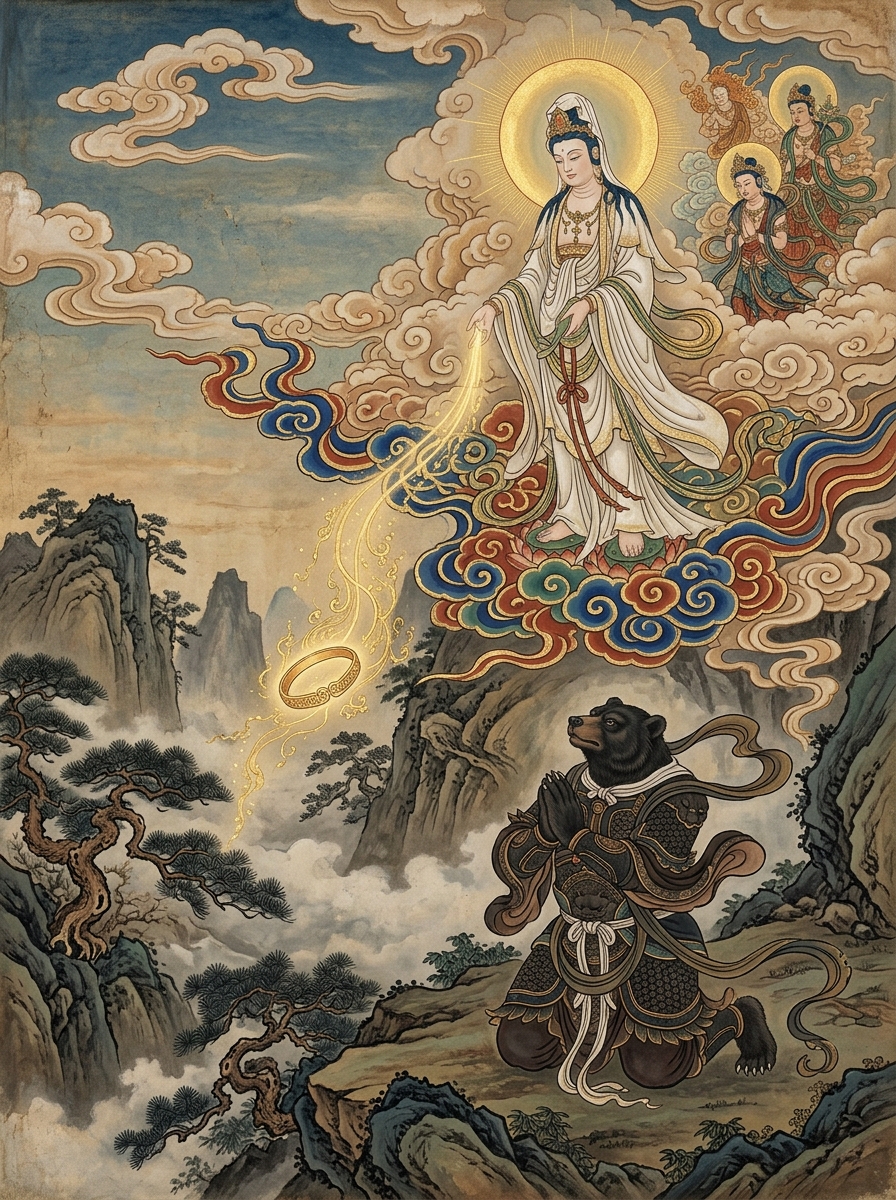
The Buddha had given Guanyin three circlets — gold, tightening, forbidding (金、紧、禁). The tightening one went on Wukong. The gold one later closed around Red Boy. The forbidding one is this, on the bear.
In Journey to the West, a monster’s story usually ends under a staff. The Black Bear Guai is one of the few who got a post instead: from king of Black Wind Mountain to guardian of Guanyin’s island. The thief of that fire-lit night now keeps her mountain for her.
The game picks the thread back up. In its story the bear returns to Black Wind Mountain, still keeping it — except the mountainside now holds a burnt temple, and in the ruin lingers an old monk’s ghost whose obsession would not burn. The keeper still keeps. Of everything greed burned, not one thing came back.
The Delight of the Eye, in the Bear’s Hands
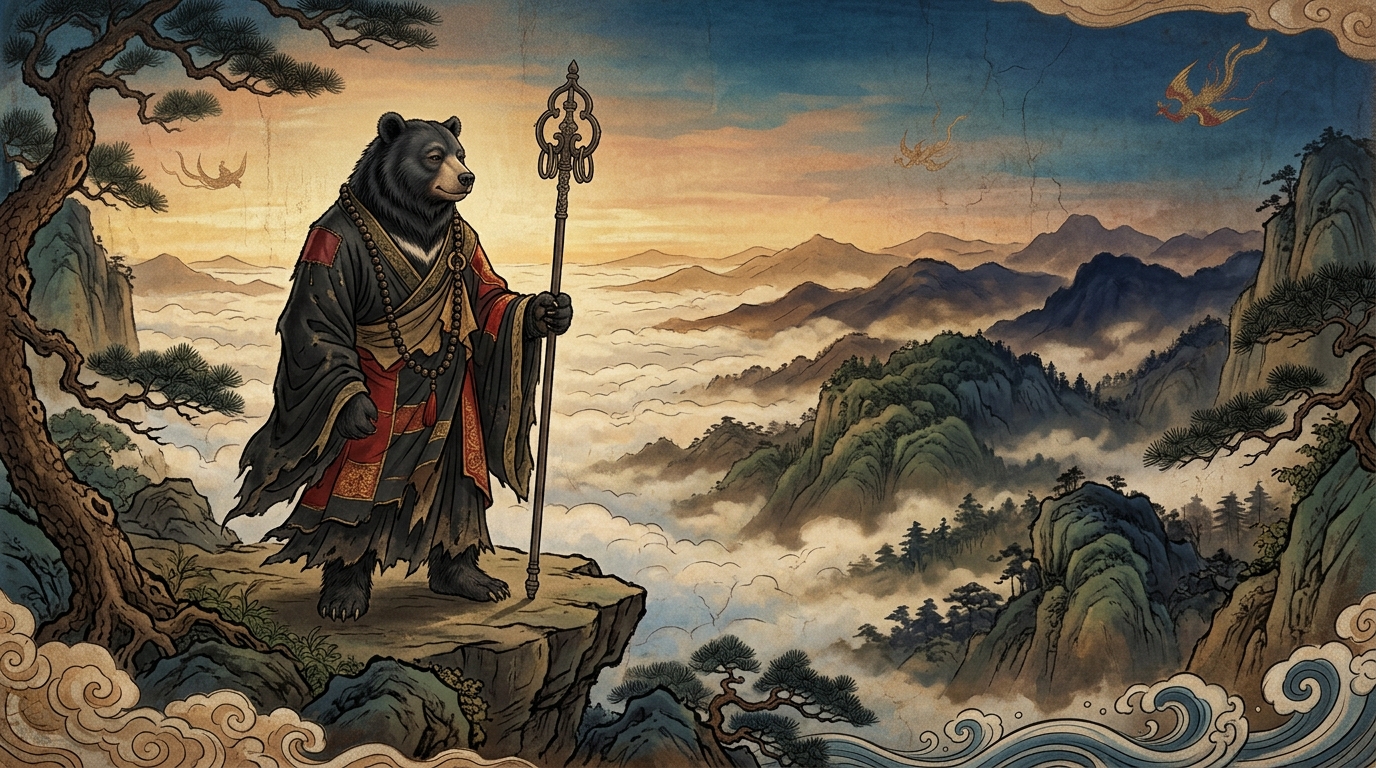
Of the six roots from the opening, the first — Delight of the Eye (眼看喜) — is held by the Black Bear Guai. The game’s arrangement is pointed. In the novel he is the yaoguai Guanyin took in, converted, and posted as guardian at Potalaka. The game sends him back to Black Wind Mountain, still keeping — but what he keeps now is not Guanyin’s temple. It is the Great Sage’s relic.
He and Elder Jinchi were old acquaintances, too — one who hoarded cassocks all his life, one who kept a temple that burned. Neither put anything down.
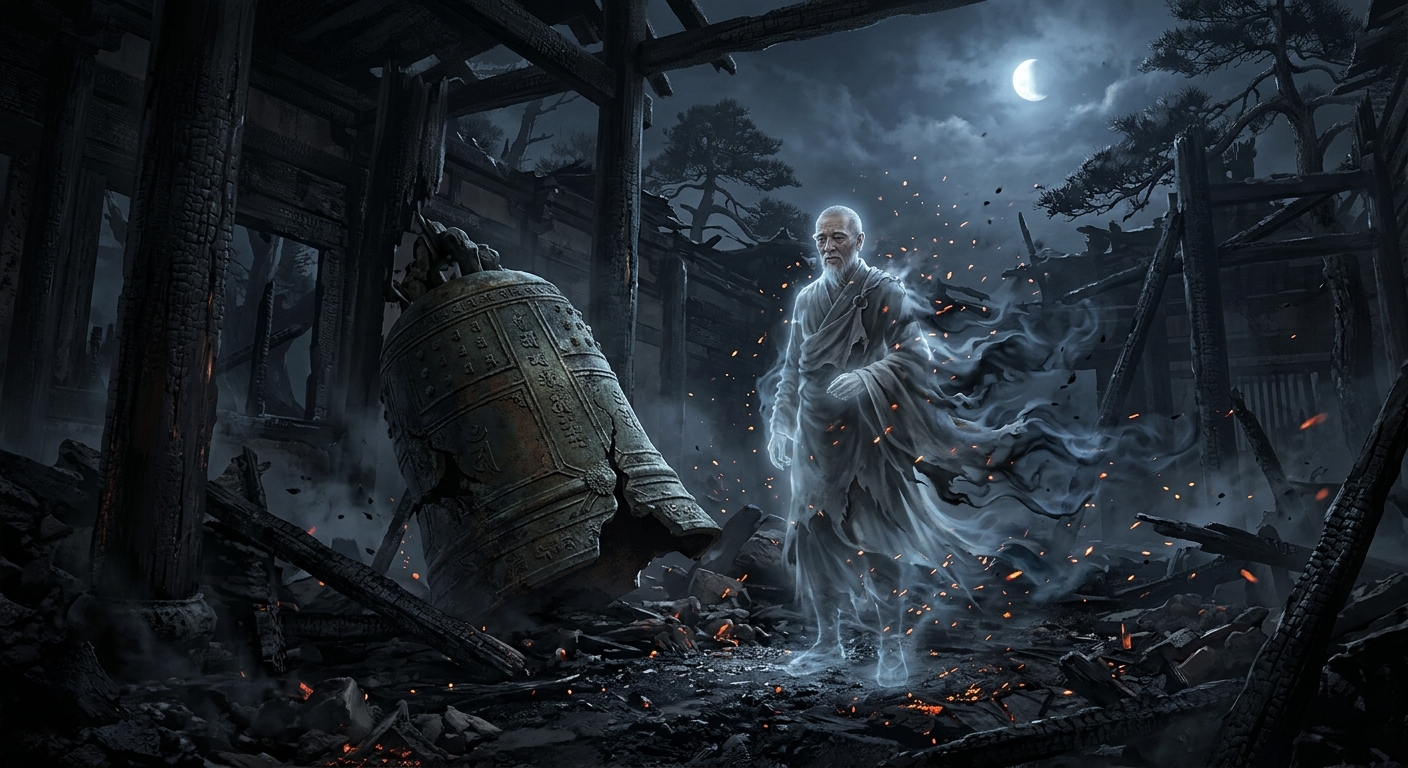
The player beats the Black Bear Guai and takes the Delight of the Eye. Elder Jinchi’s ghost steps out of the bell-sound — and the chapter’s closing animation retells the whole case: the old monk, the cassock, the fire and the ash. Walk back to the scorched walls afterward and it lands: what this chapter saw off was an obsession.
One root taken, five to go. The next stop is Yellow Wind Ridge (黄风岭) — where the Anger of the Ear (耳听怒) waits.