Peerless in the Realm: Han Xin Beyond the Canyon
In the canyon, Han Xin waits for the one strike that wins the game. In the histories, Han Xin waited all his life — from a fishing rod outside the walls of Huaiyin to the bell chamber of Changle Palace.
Updated
Peerless in the Realm
The official backstory Honor of Kings wrote for Han Xin begins with a question: “How long can a person endure humiliation?” The game answers itself: “Not for long.”1 In the story, Han Xin is the leftover of a fallen dynasty. His betrothed is taken away as a sacrificial offering, and he stays silent. A stronger power appears, and he submits — even clasps the dog’s chain on himself. All of this belongs to the game’s own fantasy world. But the character stands: the writers did not make Han Xin patient. They made him choose. “What he chose was not humiliation, but survival.” This Han Xin is waiting for “the moment to strike that kills with one blow,” and his story closes on a line of dialogue: “I will repay it a hundredfold.”
On the same official page, a column called “The Historical Figure” compresses Han Xin’s whole life into one paragraph, and ends by opening a book for the reader: the Records of the Grand Historian, chapter 92, the Life of the Marquis of Huaiyin — where Xiao He calls him guó shì wú shuāng 国士无双, “a scholar of the realm without a second.”2 The phrase took more than two thousand years to travel from the history into the game. It is the one sentence both agree on.
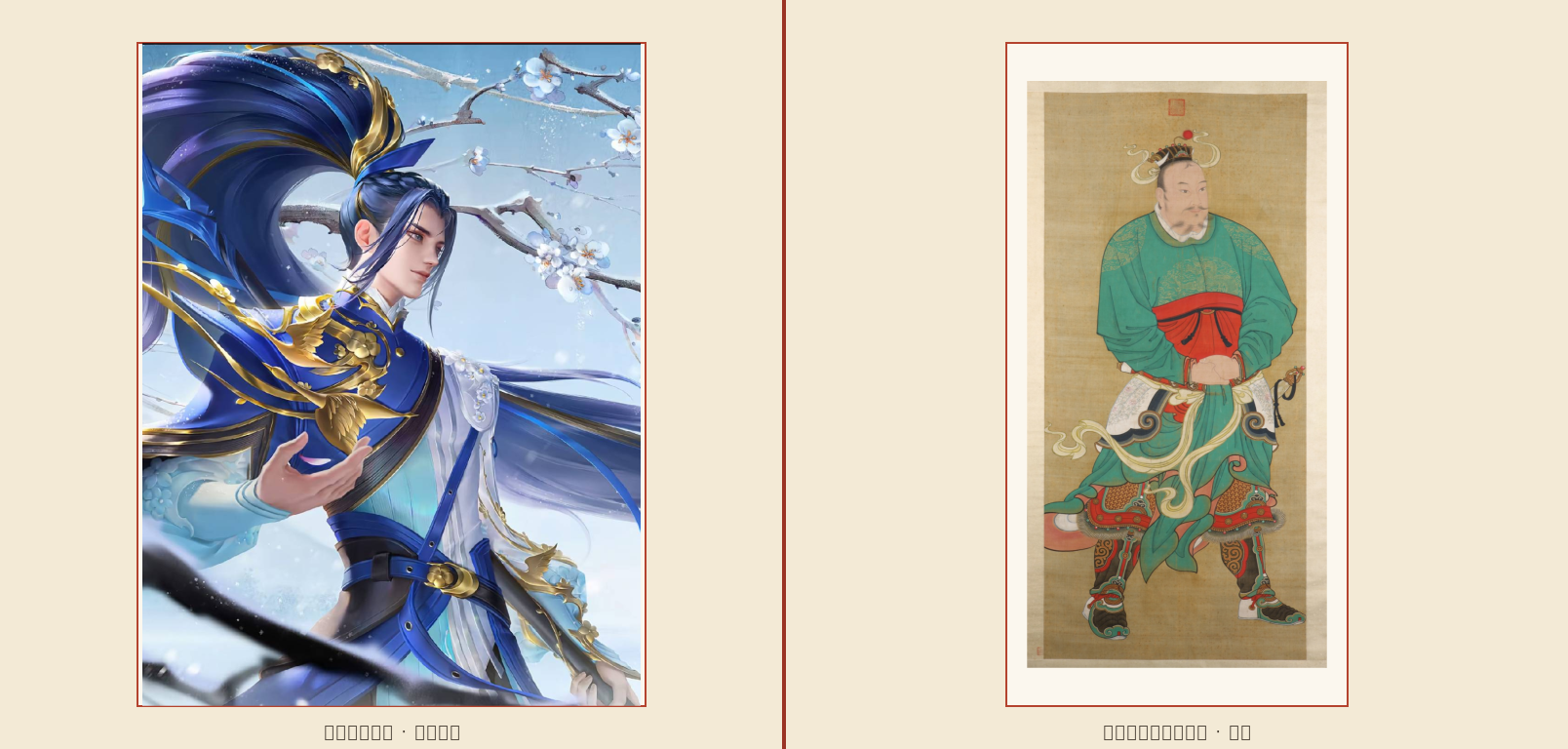
This article follows that phrase backward: from a fishing rod outside the walls of Huaiyin, to a halberd at the gate of Xiang Yu’s tent; from a moonlit chase out of Nanzheng, to an army formed with its back to the water at Jingxing; from ten thousand sandbags on the Wei River, to the seal of a king. At the end of the road it stops in the bell chamber of Changle Palace, in Chang’an. The histories needed only fourteen years to record all of it.3
The Humiliation
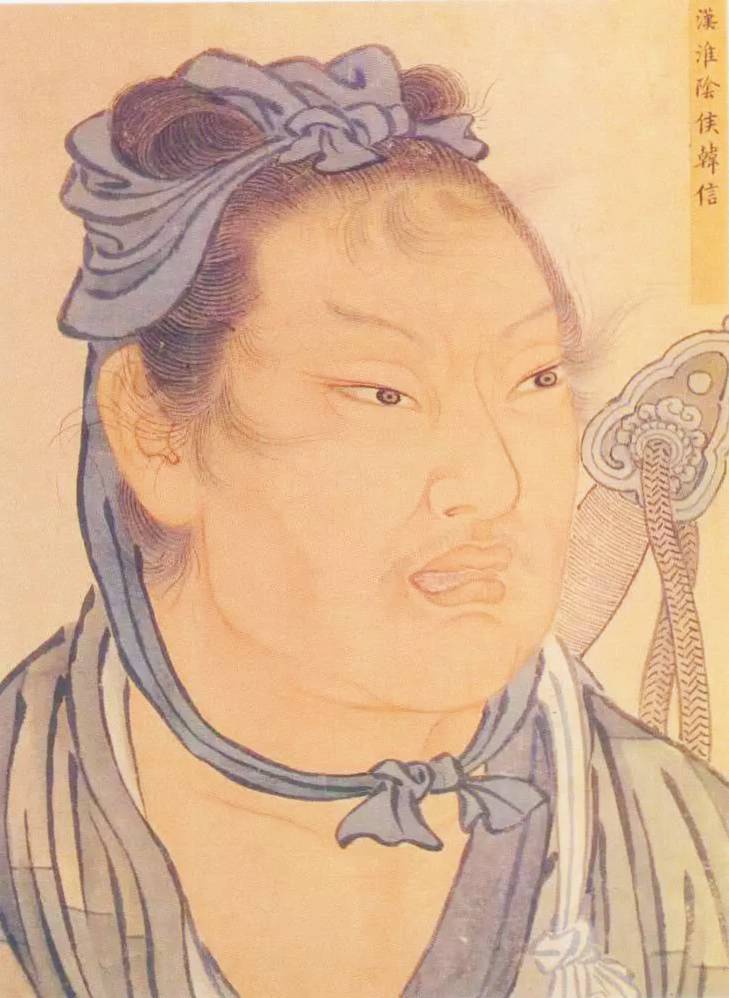
Han Xin was a man of Huaiyin. Sima Qian sums up his youth in a single line: “When he was still a commoner he was poor and of no noted conduct; he could not be recommended for minor office, and he could not support himself by trade, but constantly ate at other people’s tables, and most people were sick of him.”4 Poor, with nothing on record to his credit, unqualified for the clerkships, hopeless at business, a permanent guest at other men’s meals. Some resented the free eating. Some simply disliked the sight of him — a man who wore a sword and often went without dinner.
He lodged for months at the house of a village constable, eating without paying. The constable’s wife had enough: she cooked the rice before dawn and ate it in bed. At noon Han Xin arrived; there was no meal. He understood, turned, and left — “in anger he broke off for good.”
Hungry at last past bearing, he fished below the city wall. By the water a group of old women rinsed silk floss, and one of them, seeing that he was starving, shared her meal with him — for tens of days on end. Han Xin was delighted and said that one day he would repay her richly. The old woman flared up on the spot:
Han Xin fished below the city wall, where many women rinsed silk at the water’s edge.
One of them saw that he was hungry and fed him — for tens of days on end.
Delighted, Han Xin said to her: "One day I will surely repay you richly."
The woman was angry: "A grown man who cannot feed himself —
I pitied you, young sir, and gave you food. Did I do it for repayment!"
Records of the Grand Historian, Life of the Marquis of Huaiyin
- piàomǔ 漂母
- A woman who rinsed and beat silk floss at the water’s edge. Piǎo, to beat floss clean in the water.
- wángsūn 王孙
- A polite address for a young man, "young sir" — a courtesy, not a claim of blood.
That rebuke cut too — it never insulted him, and that was what made it merciless. It held up a mirror to exactly what he was: to everyone else, not a man with armies and rivers and mountains in his head, but a vagrant who could not put food on his own table.
One day a young man from the butchers’ quarter blocked his way in the street: “You’re big enough, and you like to carry a sword — but inside, you’re a coward.” Huaiyin’s market street must have been busy that day: a crowd around him, eyes moving between the sword at his waist and the worn clothes on his back. Then the public dare: if you’re a man, stab me. If not, crawl out between my legs.
The sentence was a dull knife. It killed nothing, and it could peel a man’s face off a little at a time.
Han Xin stared at him for a long time — his hand may already have been on the hilt. In the end he lowered himself and crawled out between the man’s legs. The crowd laughed. The laughter must have carried a long way.5
In the official story, this scene comes with a raised blade. In the history there is no blade at all — one sentence, one long stare, and a street full of laughter. Later generations called it endurance in the shadow of a great future. At the time it can hardly have felt grand: a man with no way out pressed his own face into the dust, and then had to keep walking. Han Xin said nothing, and the history did not record why he endured. That answer waited years — until he gave it himself.
Halberd Bearer
In the first year of the Second Emperor (209 BC), Xiang Liang crossed the Huai and raised the standard, and Han Xin joined up with his sword, anonymous in Xiang Liang’s tent.6 After Xiang Liang died at Dingtao he passed to Xiang Yu, and became a langzhong — a guard officer of the body, standing at the camp gate with a halberd. He offered plans, one after another; Xiang Yu declined them, one after another. “Time and again he offered Xiang Yu stratagems; Xiang Yu would not use them.” Nine characters — the whole record of his years in the Chu camp.7
Behind those nine characters stand two more years at the gate. One curtain separated him from the tent: inside sat the generals in council and a lord who might have listened; outside stood Han Xin, halberd in hand, back straight, with no road for a single sentence to travel. In Huaiyin he had worn a sword and been laughed at for it; now the sword was a halberd, and still nobody looked twice. A chaotic age never lacks for chances to rise. What it lacks is one person willing to look up and see you.
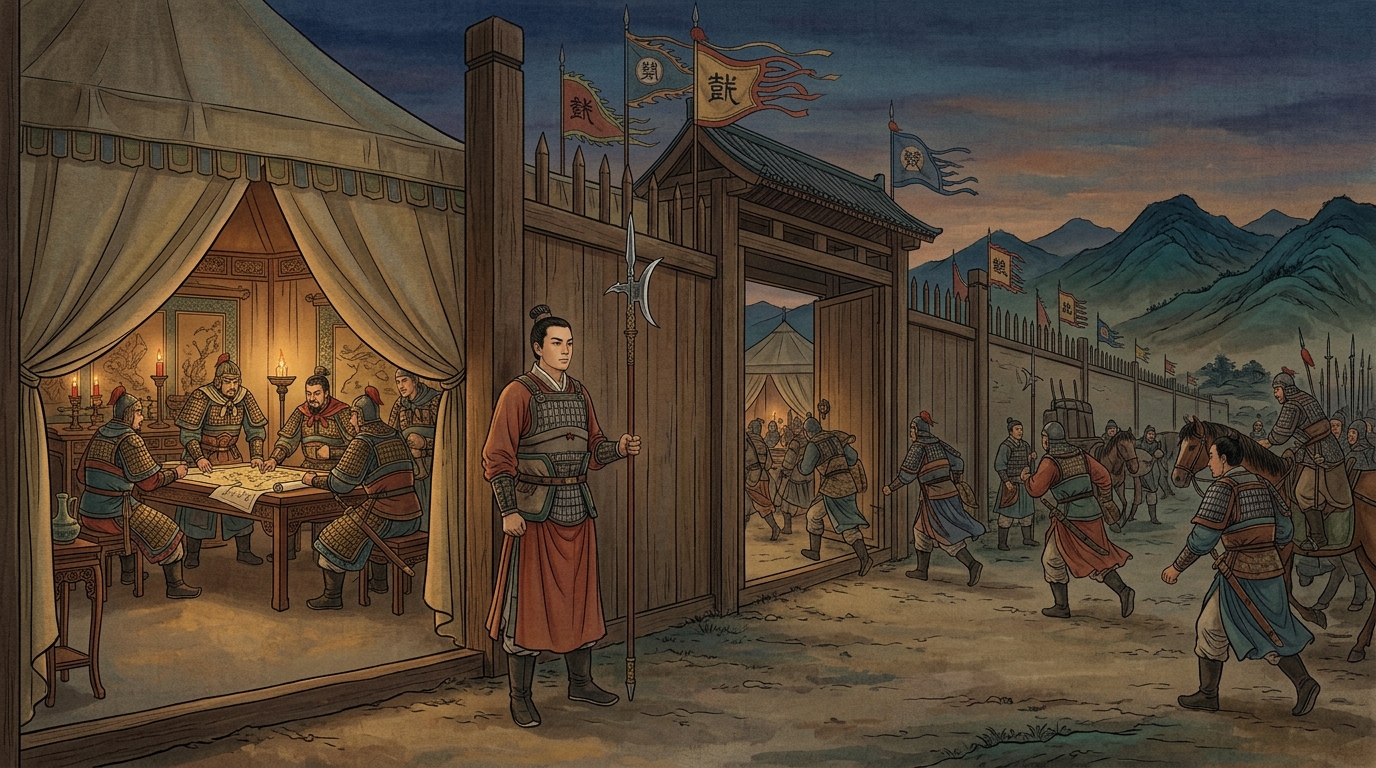
When Liu Bang marched into Shu, Han Xin turned and left the Chu camp.
The Flight
He left Chu for Han, and for a while stayed invisible — a lian’ao, a junior officer over grain and pay.8 Before long he broke the law and was condemned to death; thirteen heads in the same case had already fallen when his turn came. On the execution ground he looked up, saw Xiahou Ying, the Marquis of Teng, and shouted: “Does Your Majesty not want the empire? What are you executing strong men for!” Xiahou Ying found the words remarkable, saw that the man was remarkable too, and stayed the blade. They talked; Xiahou Ying was delighted and reported him to Liu Bang, who made him a Supervisor of Grain — still a food officer — without seeing anything in him.9 That is the hardest kind of man to be: not a man without ability, but a man who knows he has ability while nobody, ever, puts him where it counts.
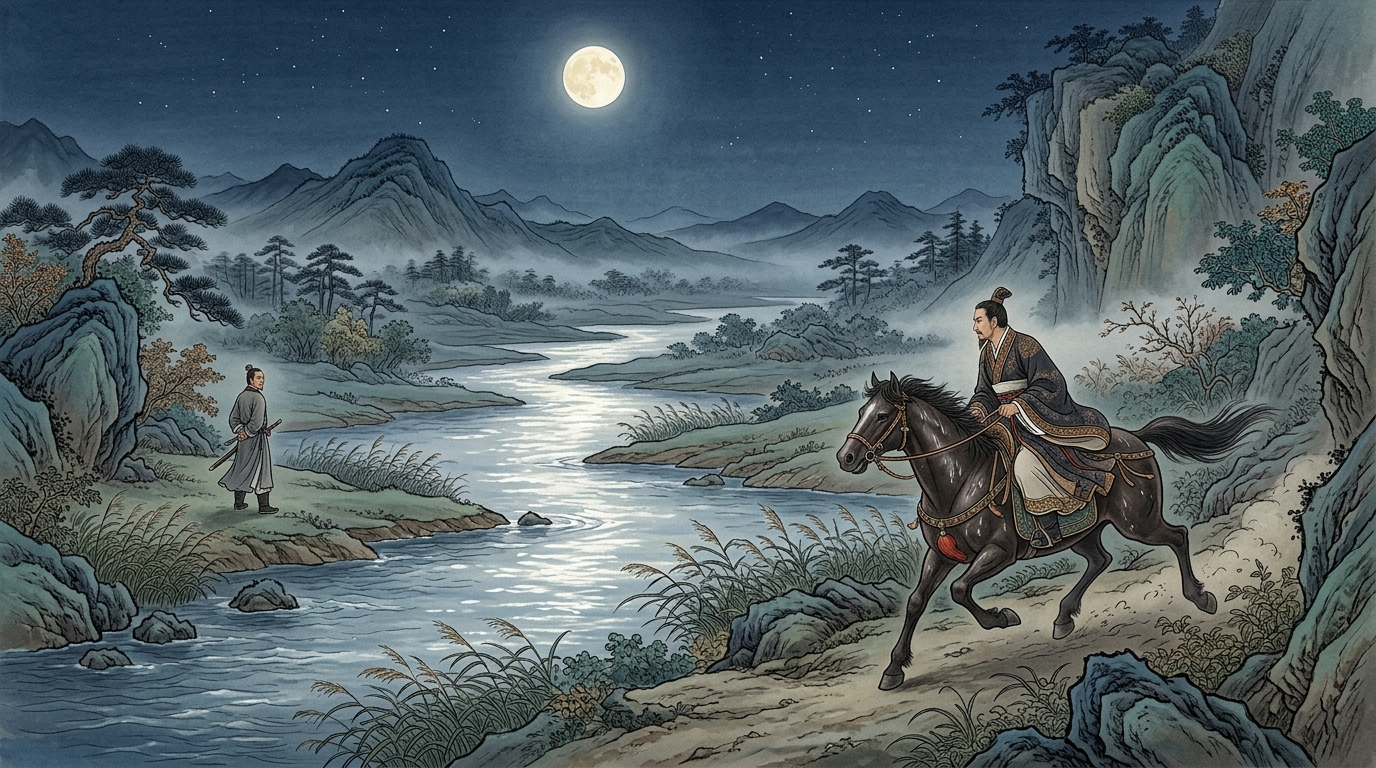
The one who finally saw the thousand-li horse was Xiao He. They had talked several times; Xiao He privately marveled. The army reached Nanzheng, and along the road dozens of officers deserted. Han Xin, reckoning that Xiao He had recommended him more than once and Liu Bang still would not use him, packed up and ran too. The night was deep and the hoofbeats fast. Many men were fleeing Liu Bang’s camp; one granary officer more or less should not have startled anyone. But Xiao He went after him — he knew this man could not be lost. Someone reported to Liu Bang: “The chancellor has fled.” Liu Bang raged, like a man losing both his hands.
A day or two later Xiao He returned to report. Liu Bang, angry and relieved at once, opened with: Dozens of generals have run and you chase none of them — you chase Han Xin. A likely story. Xiao He answered:
Running generals are easy to find. But a Han Xin is unique in the realm — there is no second.
If Your Majesty means only to be king of Hanzhong forever, you need no Han Xin.
If you mean to contend for all under Heaven, no one but Han Xin can plan that contest with you.
Records of the Grand Historian, Life of the Marquis of Huaiyin
- guó shì wú shuāng 国士无双
- A statesman of the realm without an equal. For the next two thousand years this phrase was Han Xin’s other name.
Chinese original
诸将易得耳。至如信者,国士无双。王必欲长王汉中,无所事信;必欲争天下,非信无所与计事者。
What moves people about Xiao He chasing Han Xin under the moon was never the chase. It was that at last, one person was willing to turn around and look at him.
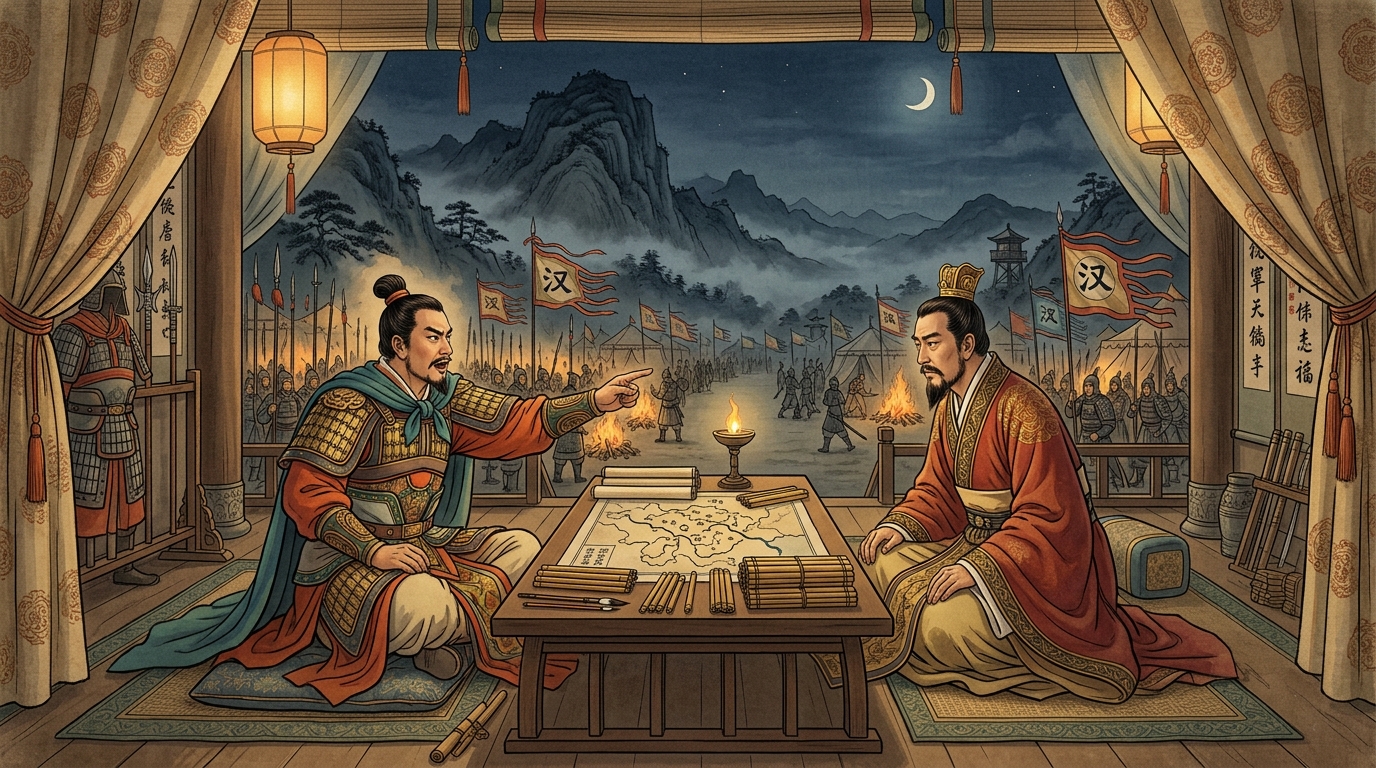
Liu Bang said: for your sake, make him a general. Xiao He said: make him a general, and he will still leave. Liu Bang gritted his teeth: then Grand General. Xiao He said: now that sounds like you. Liu Bang wanted to summon Han Xin on the spot, and Xiao He forbade that too: Your Majesty is careless with people; summon a Grand General the way you would call a boy, and that is exactly why he left. If you do it, choose an auspicious day, fast, raise an altar, and keep every rite. Liu Bang agreed. A door finally opened in Han Xin’s life.
The day of the elevation, the wind must have blown hard. Every general was pleased — each privately certain the Grand General would be himself; banners cracked on the heights, soldiers stood in rings, and everyone looked up at the man who had once crawled between a butcher’s legs. Then the name was read: it was Han Xin. The whole army was shocked. He climbed the raised altar step by step, dust under his feet, war flags over his head. For all those years nobody had believed in him; in that moment the entire Han army was made to see him. Was it sweet? It must have been. When a man scorned that long is suddenly lifted above ten thousand, that is not ordinary honor — it is the world admitting, at last, that it misread him.10
The Counsel
When the rites were done, Liu Bang sat down: “Chancellor, you have spoken to me of this general more than once. What do you have to teach me?” Han Xin did not answer; he asked instead: Your Majesty means to march east and contend for the empire — your opponent is the King of Chu, is it not? It is. “And judging Yourself in courage, fierceness, humaneness and strength — how do You weigh against him?” Liu Bang was silent a long while. “I am not his equal.” Han Xin bowed twice and said: neither do I think you his equal. But I served under him. Let me tell you what kind of man he is —
The King of Chu roars, and a thousand men drop where they stand —
yet he cannot entrust anything to a capable general: that is the valor of a single man.
He is courteous and kind face to face, gentle in speech;
when his men fall ill he weeps and shares his own food with them.
Yet when a man has earned a fief, the seal of office wears round in his hand
before he can bring himself to give it. This is what is called the kindness of a woman.
Records of the Grand Historian, Life of the Marquis of Huaiyin
- yīn’è chìzhà 喑噁叱咤
- A roar that dares a thousand men at once.
- wán 印刓敝
- Wán, to wear round. He handled a deserved seal of office until its edges rounded — and still could not give it away.
The valor of one man; the kindness of a woman. Eight characters, and the fiercest fighter under Heaven was fixed in type. Han Xin went on: the three kings of the Three Qin are Qin men themselves — the fathers and brothers of Qin hate them for the two hundred thousand Qin sons who were buried alive while their officers survived. Your Majesty entered Wu Pass without touching a hair of the people, and abolished the harsh laws of Qin; the people of Qin long for you like rain after drought. The Three Qin can be taken by a proclamation on paper. Liu Bang was overjoyed, “and regretted only that he had come to know Xin so late.”11
In the eighth month the King of Han marched east out of Chencang and settled the Three Qin.
That is everything the Life of the Marquis of Huaiyin says about the reconquest of the Three Qin: one sentence. The famous “openly repair the plank roads, secretly cross at Chencang” appears nowhere in the Records — it was an invention of Yuan-dynasty theater.12 The historian spared not one word for his new Grand General’s first campaign — perhaps because, for Han Xin, it really was only a beginning.
From then on, Han Xin began to become Han Xin. Chencang; Jingxing, backs to the water; the Wei River, and the death of Long Ju.
Backs to the Water
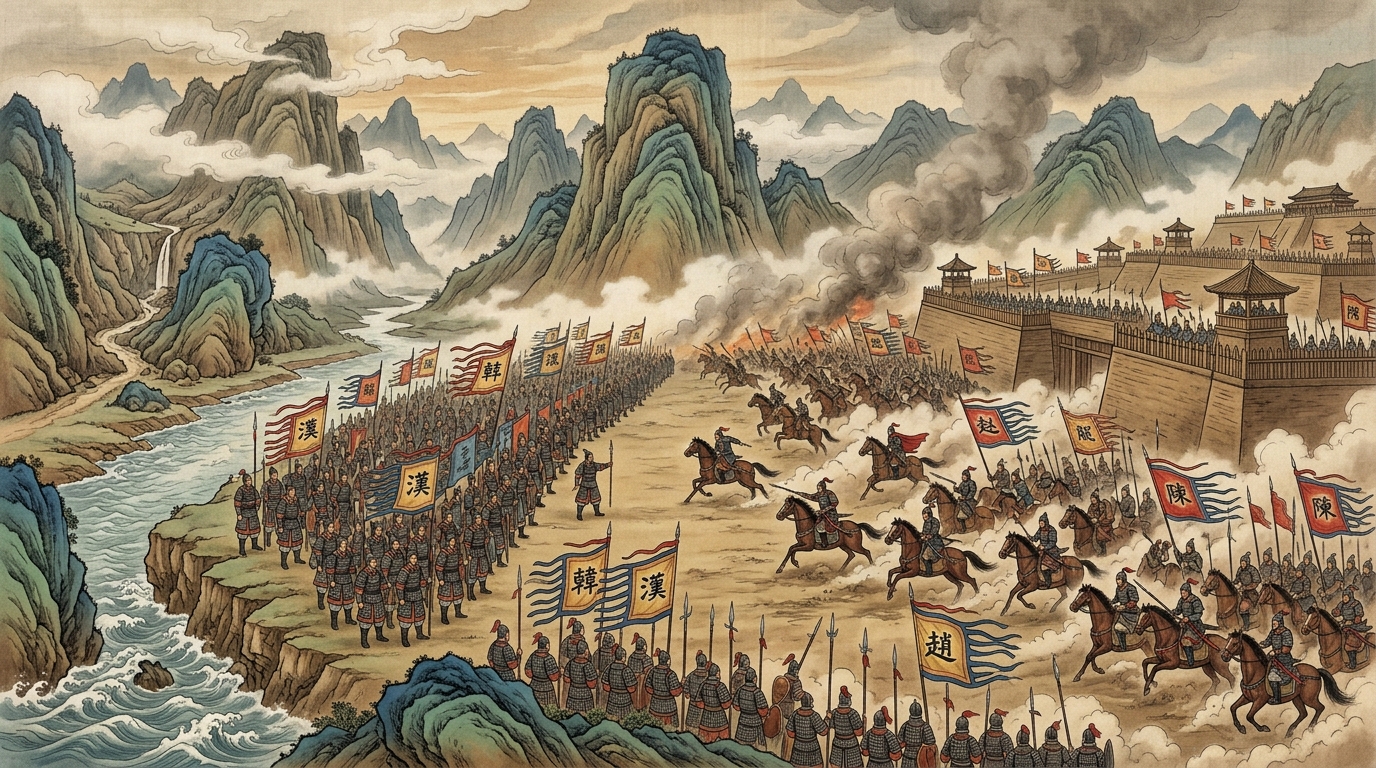
The next year the King of Wei, Wei Bao, rebelled. Han Xin made a show of boats at the Pujin ford while his real force crossed the river upstream at Xiayang on rafts of pottery jars lashed to wooden frames, fell on Anyi, and took Wei Bao alive; then he broke Dai.13 That same year he and Zhang Er led tens of thousands east against Zhao at Jingxing — where King Xie of Zhao and Chen Yu, the Marquis of Cheng’an, waited with an army said to number two hundred thousand.
Li Zuoche, the Lord of Guangwu, advised Chen Yu: the Jingxing defile is too narrow for chariots in file or horsemen in column; the Han army’s grain must be far in the rear. Give me thirty thousand picked men to cut their supply line from a side road, and within ten days you shall have both generals’ heads at your tent. Chen Yu — a Confucian who believed “a righteous army does not use deception or strange stratagems” — refused. When Han Xin’s spies reported this, he was delighted, and only then did he dare lead his men down the defile.
Thirty li from the pass, at midnight, he picked two thousand light cavalry, gave each man a red flag, and sent them into the hills by a side path with the simplest of orders: tomorrow we feign defeat; Zhao will empty its walls to pursue — ride into their camp, pull down the Zhao flags, and raise the red ones. Then he sent ten thousand men out first, to form line with the river at their backs. The Zhao army watched, and roared with laughter.
At dawn Han Xin raised the general’s banners, beat the drums, and marched out of the pass. Zhao’s walls opened, and the battle went on for most of the day; then Han Xin pretended to lose everything — flags, drums — and fell back into the river-side formation. Zhao emptied its camp to scramble for the trophies. The Han men with the water behind them had nowhere to retreat, and fought like men already dead. The two thousand horse swept into the empty Zhao camp, pulled down the Zhao flags, and raised two thousand red ones. When the Zhao army turned and saw its own camp in red, it believed its king was taken, and the whole host dissolved. Attacked from two sides, the Han men killed the Marquis of Cheng’an at the Zhi River and captured King Xie alive.
After the battle the generals came to congratulate him, and someone asked: the Art of War says camp with the mountains behind and water in front. You told us to form with our backs to the river, and promised we would dine together after taking Zhao. We did not believe it — and yet it worked. What kind of tactics are these? Han Xin answered:
It is in the Art of War — you gentlemen simply did not look.
Does it not say: "Throw them into death ground, and they live;
set them on doomed ground, and they survive"?
And I was not leading men long trained to my hand.
I was driving men from the marketplace to war.
The only way was death ground: make every man fight for himself.
Give them living ground, and they all run. What use would they have been then?
Records of the Grand Historian, Life of the Marquis of Huaiyin
- qū shì rén ér zhàn 驱市人而战
- To drive men of the marketplace into battle — an army of untrained civilians.
Chinese original
陷之死地而后生,置之亡地而后存。
The generals bowed: “This is beyond the rest of us.” Then he spent a letter where an army might have gone: one letter into Yan, and Yan surrendered at the mere report. Not a soldier spent.
Breaking the River
The next opponent was Qi. Han Xin marched east, and before he reached the Pingjin ford, word came that Liu Bang’s envoy Li Yiji had talked the whole of Qi into surrender — more than seventy cities — single-handedly. Han Xin thought to stop. His strategist Kuai Tong stopped him: you march on Qi by royal order; Liu Bang sent another envoy, but did he send you a sealed order to halt? No. One scholar, with his tongue, took more than seventy cities. A general with tens of thousands of men took more than a year to win fifty in Zhao. Are years of generalship worth less than a boy scholar’s talk? Han Xin crossed the river, shattered the Qi army at Lixia, and drove on to Linzi. The King of Qi, Tian Guang, decided he had been sold out by Li Yiji, set up an oil cauldron, and boiled the envoy alive.14
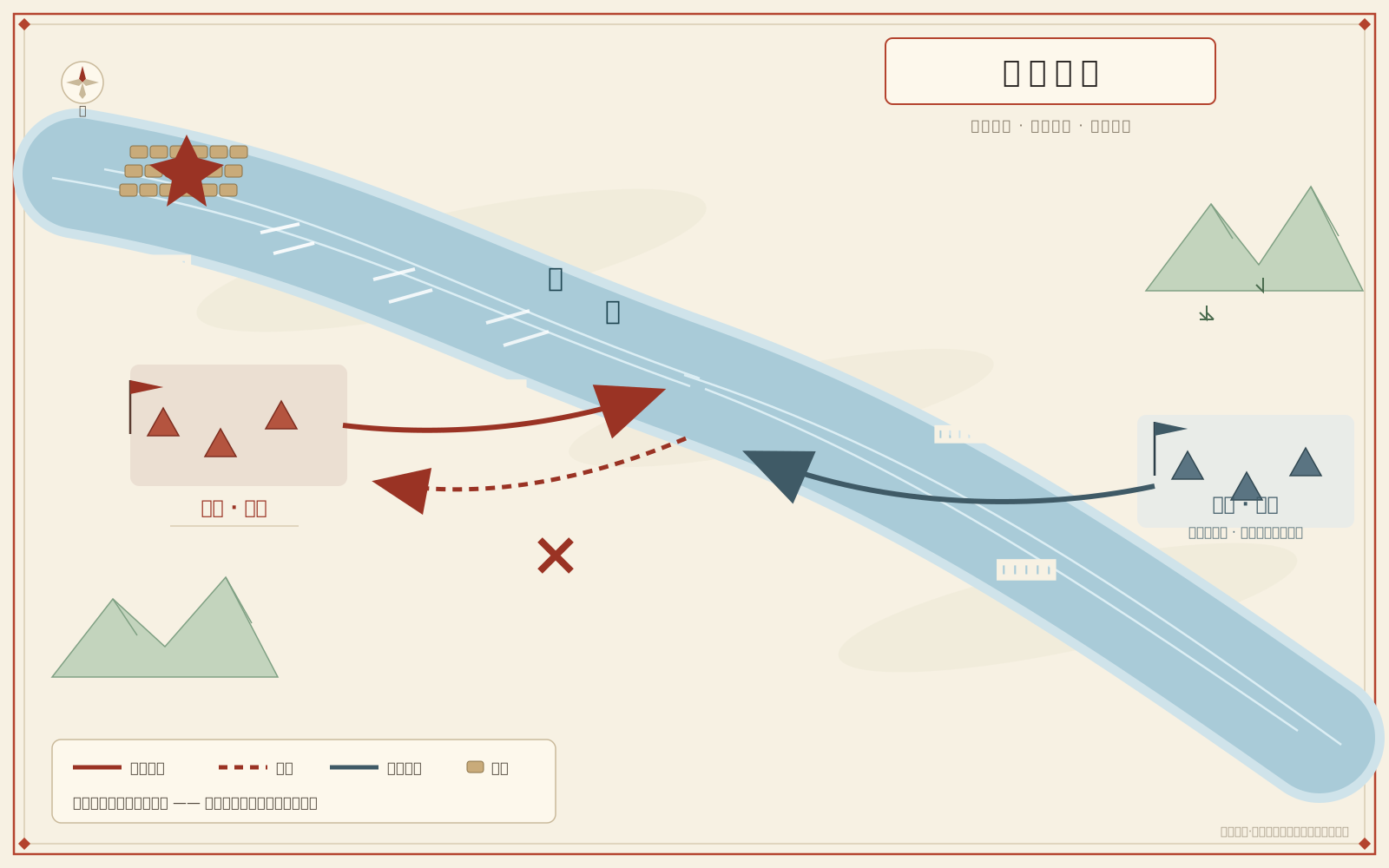
Xiang Yu sent the general Long Ju to save Qi — two hundred thousand men by rumor — and he faced Han Xin across the Wei River. Someone advised Long Ju to dig deep and sit tight. He sneered: “I have always known what kind of man Han Xin is. Easy.” Besides — if Qi surrendered without a fight, where was his glory? Overnight Han Xin had more than ten thousand sandbags made and packed them into the upper Wei, damming the current. The next day he took half his army across to strike, fought briefly, then “feigned defeat and turned back.”15 Long Ju was delighted: “I always knew he was a coward.” He poured his army across in pursuit. Han Xin’s men opened the dam, and the river came down from upstream with the whole height of the night behind it. The main body of the Chu army was caught on the far bank, cut in two. Han Xin wheeled and struck, and killed Long Ju on the field. East of the river the Chu force fell apart, and the King of Qi, Tian Guang, fled.
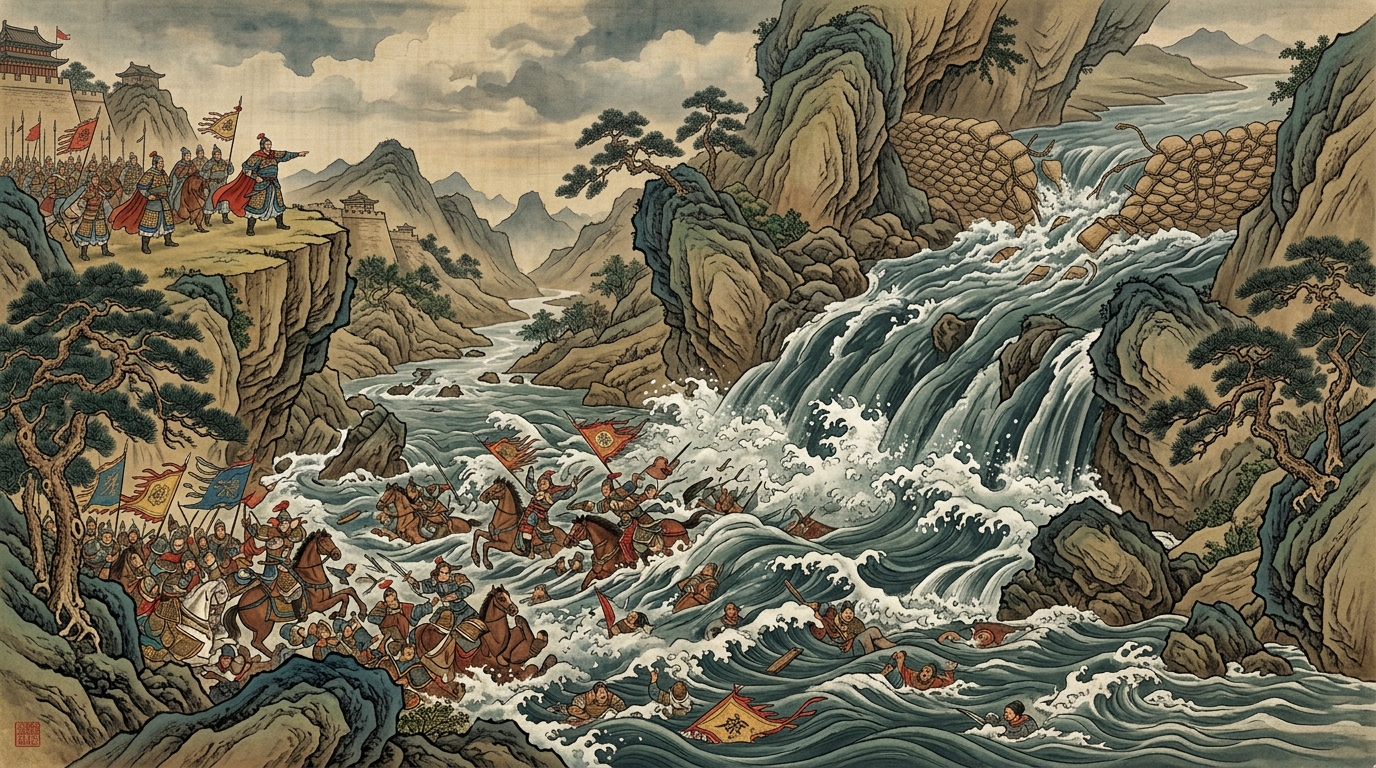
The four characters “I always knew he was a coward” had been said before — by a young butcher in Huaiyin: timid at the core. The people who laughed at his cowardice, one after another, ran from the marketplace all the way to the camp of a two-hundred-thousand-man army.
Acting King
With Qi settled, Han Xin sent to Liu Bang asking to be made “acting king” of Qi — a land that changed sides at every wind, bordering Chu, needed a king to hold it. Liu Bang was at that moment besieged at Xingyang by Xiang Yu, arrows thudding into the chariot he sat in. When the letter arrived he exploded: “I am trapped here morning and night waiting for him to come save me — and he wants to make himself a king!” Zhang Liang and Chen Ping pressed his foot under the table and whispered: can you actually stop him? Better to make him king while you can, treat him well, and let him hold Qi for you. Liu Bang collected himself and finished the sentence on the same breath of rage:
A true man settles the feudal kings and is a true king himself.
What would he want with "acting"?
Records of the Grand Historian, Life of the Marquis of Huaiyin
- jiǎ wáng 假王
- Acting king. Liu Bang sent Zhang Liang to install Han Xin as King of Qi on the spot — and to call up his troops against Chu.
On the surface it was an elevation. The thorn may have gone in exactly there. Han Xin believed he was asking for recognition; what Liu Bang saw was a man who might never be held down again.16
Xiang Yu immediately sent Wu She to turn him: the Chu-Han contest has become a scale, and you are the weight. Join the right and Liu Bang wins; the left and the King of Chu wins. When the King of Chu falls today, the next turn is yours. Why not leave Han, join Chu, and divide the world in three? Han Xin declined: I served the King of Chu as a langzhong, nothing more — a halberd at the gate; my words were not heard, my plans not used. Liu Bang gave me the seal of a Grand General, gave me tens of thousands of troops, took off his own clothes to clothe me, pushed his own food toward me, and used what I said. That is why I am here. To turn against Han would be unlucky, and I would not do it if I died for it.17
His strategist Kuai Tong came at it another way: he read faces. “Read from the front, your features promise a marquisate — and danger, no safety. Read from the back, the nobility is beyond words.” Bèi 背, the character for “back,” is the character for betrayal.18 He laid out the logic: “A man whose boldness and strategy shake his sovereign is in danger; merit that covers all under Heaven receives no reward.” “Heaven gives and you do not take — you will be blamed for it. The hour comes and you do not act — you will suffer for it.” “An hour like this is hard to win and easy to lose. Hour, hour — it never comes twice.” Han Xin answered:
The King of Han received me with great kindness:
his carriage carried me, his clothes clothed me, his food fed me.
I have heard: he who rides a man’s carriage shares his calamities;
he who wears a man’s clothes carries his sorrows;
he who eats a man’s food gives his life for the man’s affairs.
How could I turn toward profit and away from duty!
Records of the Grand Historian, Life of the Marquis of Huaiyin
- xiàng bèi 乡利倍义
- Xiang, to turn toward profit; bèi, to turn away from duty. Both characters carry the pun on bèi 背, "back" — the very word of Kuai Tong’s face-reading.
“Han Xin wavered, could not bear to turn against Han, and — sure that his merit was so great Liu Bang would never take his Qi — declined.” Kuai Tong, unable to move him, went mad on purpose and took work as a shaman.19
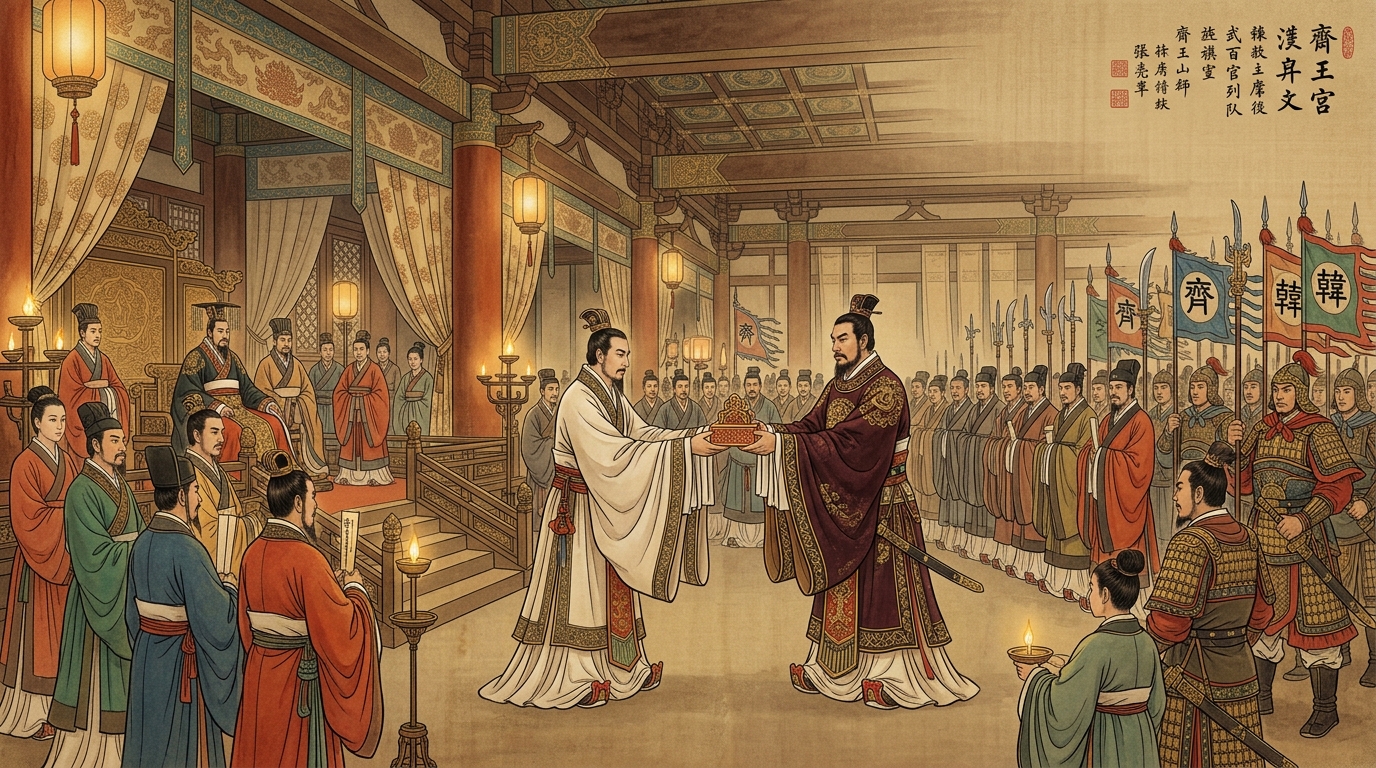
Gaixia
In the fifth year of Han, after the defeat at Guling, Liu Bang followed Zhang Liang’s plan and promised fiefs to the two kings who still hesitated. Only then did Han Xin and Peng Yue bring their armies to Gaixia to settle things with Xiang Yu. The great array was Han Xin’s to set. The Basic Annals of Gaozu record it: the Marquis of Huaiyin with three hundred thousand in front, meeting the enemy head on; General Kong on the left; General Fei on the right; Liu Bang behind; Zhou Bo and General Chai in the rear.20
At first glance the array makes no sense. Xiang Yu’s hundred thousand Chu men were the sharpest blade in the world; meet it head-on and whoever meets it shatters. Han Xin put three hundred thousand of his own men on the line — himself on the edge of the blade, Liu Bang guarded at the very back. He wanted Xiang Yu to charge him first.
Han Xin engaged first, was repulsed, and gave ground. The history spends five characters on it: he met the enemy, fared badly, and withdrew. The Chu edge bit into the three hundred thousand and pushed deeper — the line gave way, gave way without breaking, while the wings of Kong and Fei quietly watched the front concede the field. Now. The wings poured in from left and right onto the Chu flank; Han Xin turned and struck again. The Chu soldiers could not stand, and were routed at Gaixia.
One step back first; let the wings grind down the point of the blade; then turn and close the trap. The Jingxing trick — retreat as attack — scaled up from a few thousand men to a battlefield of three hundred thousand.
That night Chu songs rose on every side of the Chu camp. The songs on four sides are recorded in the Basic Annals of Xiang Yu;21 “ambush on ten sides” is a name from later legend and pipa music — the history never says it.22 The Chu army’s heart dissolved into the singing.
Xiang Yu broke out that night with eight hundred horse, fighting as he rode, until at Dongcheng twenty-eight riders were left to him and thousands of Han cavalry behind. At the Wu River a ferryman held a boat at the crossing and begged him: Jiangdong is small, but it is enough for a king — cross, quickly, while only I have a boat. Xiang Yu laughed. “Heaven destroys me — why should I cross? I crossed west with eight thousand sons of Jiangdong, and not one of them comes back. Even if their fathers and brothers out of pity made me king — what face could I show them? And even if they said nothing, would I not be ashamed in my own heart?” He gave his horse of five years to the ferryman, ordered his riders to dismount and fight with short weapons, and killed several hundred Han soldiers himself, taking more than ten wounds. Then, seeing an old acquaintance, Lü Matong, in the Han line, he said: “I hear the King of Han has priced my head at a thousand gold and a fief of ten thousand households. Let me do you this favor.” And he cut his own throat.
An age’s hegemon took his exit there.
The moment Xiang Yu fell, Liu Bang rode into Han Xin’s camp and took his army out from under him. Han Xin was transferred: King of Chu, seat at Xiapi. The young man who had once crawled between a butcher’s legs came home to Chu with a king’s banner and guard — clothed in brocade, going home.
Made by Xiao He, Undone by Xiao He
Arriving in his Chu state, Han Xin summoned the washing woman and gave her a thousand gold. He summoned the village constable, gave him a hundred coins, and graded him in one line: “You, sir, are a small man — a good deed done halfway.” Last he summoned the young butcher who had once sent him crawling, and made him a lieutenant of Chu, an officer for catching thieves. He explained his account to the generals and ministers:
This was a man of spirit. When he insulted me back then,
could I not have killed him? But killing him had no name to it —
no honor in it. So I endured, and arrived here.
Records of the Grand Historian, Life of the Marquis of Huaiyin
- wú míng 无名
- No name to it: no just cause, nothing worth the price.
- Chu zhongwèi 楚中尉
- Military lieutenant of Chu, in charge of catching thieves.
Not fear — arithmetic. Killing a man not worth killing would have cost him his own life and future, and bought nothing. The laughter of that street he carried for a lifetime, and settled it in one sentence.
The good days lasted barely a year. In the sixth year of Han, someone wrote in to accuse the King of Chu, Han Xin, of plotting revolt. Liu Bang took Chen Ping’s plan: the Son of Heaven tours his realm, inspects Yunmeng, and summons the lords to meet him at Chen — and Han Xin is to attend. At that moment Zhongli Mo, an old general of Xiang Yu’s, was hiding under Han Xin’s protection, and Liu Bang named him. Han Xin could not decide: hand over an old friend to save himself, or keep him and share the crime. Zhongli Mo saw through the hesitation and left his answer on the table: “If you seize me today to flatter Han, I die today — and you follow me before the day is out.” He cursed Han Xin — “You were never a true gentleman” — and cut his own throat. Han Xin carried the head to the meeting as proof of loyalty. They took the head, and did not release the man: at Liu Bang’s word, guards bound him on the spot and packed him into a rear carriage of the imperial train.23 Han Xin said:
So it is, as people say:
when the cunning hare is dead, the hunting dog is boiled;
when the birds are gone, the good bow is stored away;
when the enemy state is broken, the strategist dies.
All under Heaven is settled now — I was always going to be boiled.
Records of the Grand Historian, Life of the Marquis of Huaiyin
- hēng 亨
- Hēng, a graph for pēng, "to boil" — the character used in the Records.
- as people say 人言
- The proverb was already old: Fan Li said nearly the same words to Wen Zhong (Records, Basic Annals of King Goujian of Yue). Han Xin’s "so it is, as people say" quotes a saying everyone knew.
Brought to Luoyang under guard, he was pardoned and demoted: Marquis of Huaiyin. He knew Liu Bang feared and resented his ability, and took to claiming illness and staying away from court — unhappy at home, ashamed to stand in the same register as Zhou Bo, Marquis of Jiang, and Guan Ying, Marquis of Yingyin.24 Passing the gate of Fan Kuai one day, he was greeted with a kneel and a bow, Fan Kuai addressing himself as “your subject”: “That the Great King would deign to visit me!” — and outside the gate, Han Xin laughed at himself: “So I have come to this — keeping company with Kuai.”25
Now and then Liu Bang chatted with him about the ranking of the generals. Once he asked: Speaking frankly — how many men could I command? Han Xin: Your Majesty could command no more than a hundred thousand. — And you? “Your servant: the more, the better.” Liu Bang laughed: The more, the better — and how did I catch you? Han Xin: Your Majesty cannot command soldiers, but you command commanders. “And besides, that was Heaven’s gift — no work of man.”26 “The more, the better” became a set phrase in the language. The rest of that conversation became the last time the two of them ever talked war.
A king made a marquis; battlefields traded for palace eaves. The man who had once moved armies of thousands could suddenly only read faces under the eaves of Chang’an. Han Xin was, of course, unwilling — and in the unwillingness lived both a merited official’s grievance and the same breath from his boyhood that had never dispersed: a man like me, kept here? What emperors fear most is precisely that breath.
In the tenth year of Han the chancellor of Dai, Chen Xi, rebelled and declared himself King of Dai. In the Records’ telling, Han Xin’s shadow runs through it: Chen Xi had called on Han Xin to take leave before departing; Han Xin cleared the room, sighed at the sky, and said — you hold a land of the empire’s finest soldiers, and you are a trusted favorite of the Emperor. The first report of your revolt he will not believe; the second will plant doubt; the third will bring him in person, at the head of his army. “I will rise from within, and the realm can be taken.” Chen Xi answered: “I follow your instruction.”27 In the eleventh year Liu Bang marched against Chen Xi; Han Xin claimed illness and stayed behind.
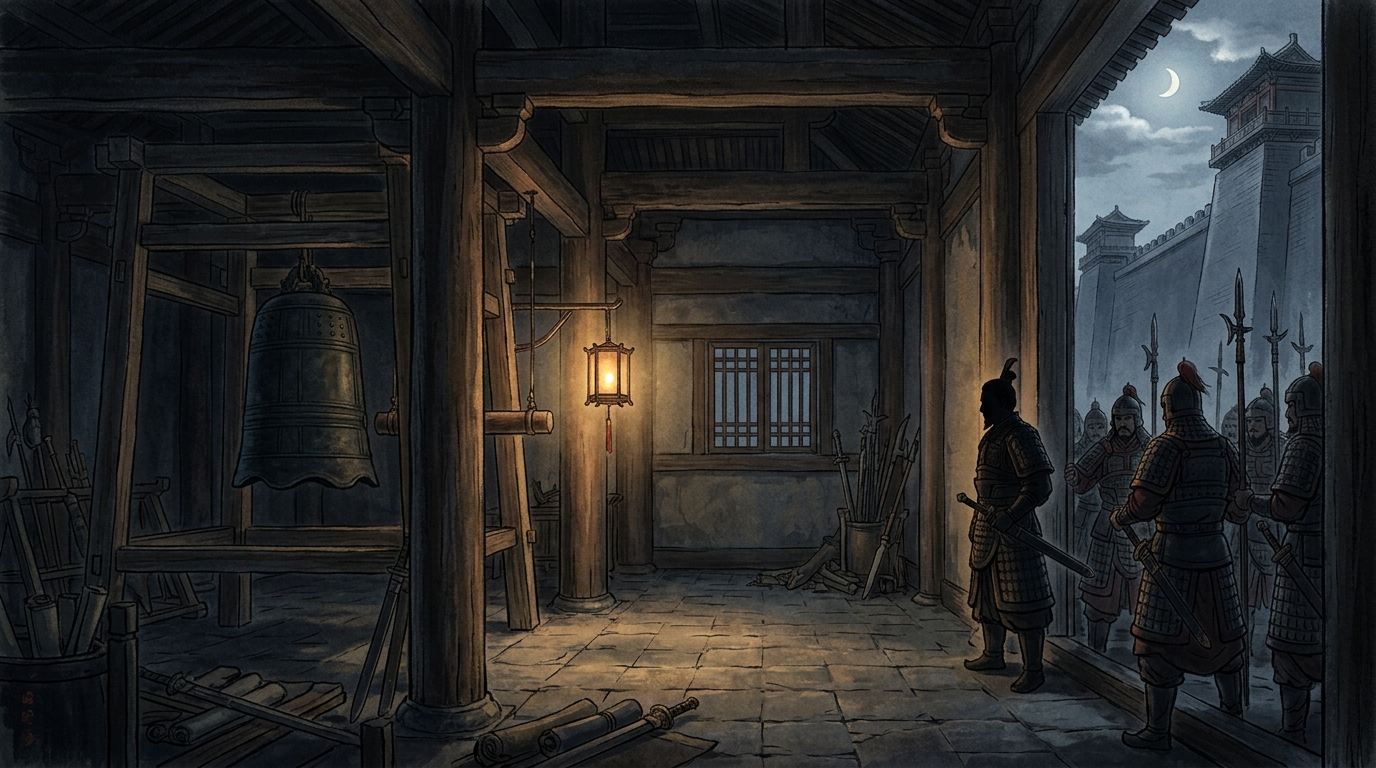
In the capital, Empress Lü and Xiao He laid the plan: have a man return from the front with word that Chen Xi was dead, and let the nobles and ministers all enter the palace to offer congratulations. Xiao He went in person to persuade Han Xin: even sick, you must make an effort to congratulate. The man who had chased him back under the moon now walked him to the palace gate with his own hands. You see how merciless history can be: the man who chased him back and lifted him onto the altar was the man who, at the end, walked him into a palace he would never leave. The moment Han Xin entered, the Empress set guards on him and had him cut down in the bell chamber of Changle Palace. As the blade fell, he said:
I regret I did not follow Kuai Tong’s plan —
to be deceived by a woman and a boy. Is this not Heaven!
Records of the Grand Historian, Life of the Marquis of Huaiyin
- ér nǚ zǐ 儿女子
- A woman and a boy — the Empress and the circle around her.
He finally knew it was never a failure of generalship. He had won too many battles, and never learned the one skill his victories had made necessary: how to go on living once your merit frightened everyone.
His three clans were exterminated.28
The Records spend six characters on the death: “cut down in the bell chamber of Changle.” The folklore is far more elaborate — a pact, people tell it, between Liu Bang and Han Xin: see the sky, and you may not kill me; see the earth, and you may not kill me; see iron, and you may not kill me. So the Empress had the bell chamber shuttered and carpeted, hung Han Xin from a beam, and had him stabbed with a bamboo spear. No sky over his head, no ground under his feet, no iron at hand. Three promises, routed by one arrangement.29 Later generations pressed the before and the after into eight characters: chéng yě Xiāo Hé, bài yě Xiāo Hé — “made by Xiao He, undone by Xiao He” — a saying the Song scholar Hong Mai recorded as street talk, more than a thousand years after Sima Qian.30
Gaozu came back from the rebellion and found Han Xin dead, “half delighted, half pitying.” He asked what Xin had said at the end. The Empress relayed: he regretted not taking Kuai Tong’s plan. Liu Bang said: that is Qi’s talker. He ordered Qi to arrest Kuai Tong. Brought in, Kuai Tong defended himself — every man serves his own lord — until Liu Bang had nothing to say. “Release him.”
The bell chamber must have been cold. At the end, did Han Xin think of the streets of Huaiyin? The boy with the knife, the crowd’s laughter, the meal the washing woman held out, the war flags lifting in the wind on the day of the altar? He had climbed out of the dust and stood at the highest place there was — and in the end he died in a room no wind could reach.
By then he had nothing. No soldiers, no power, nobody who believed in him — only a breath of refusal that would not disperse. Later, that breath won him half the world. Later still, it walked him into the bell chamber of Changle Palace.
It Was So
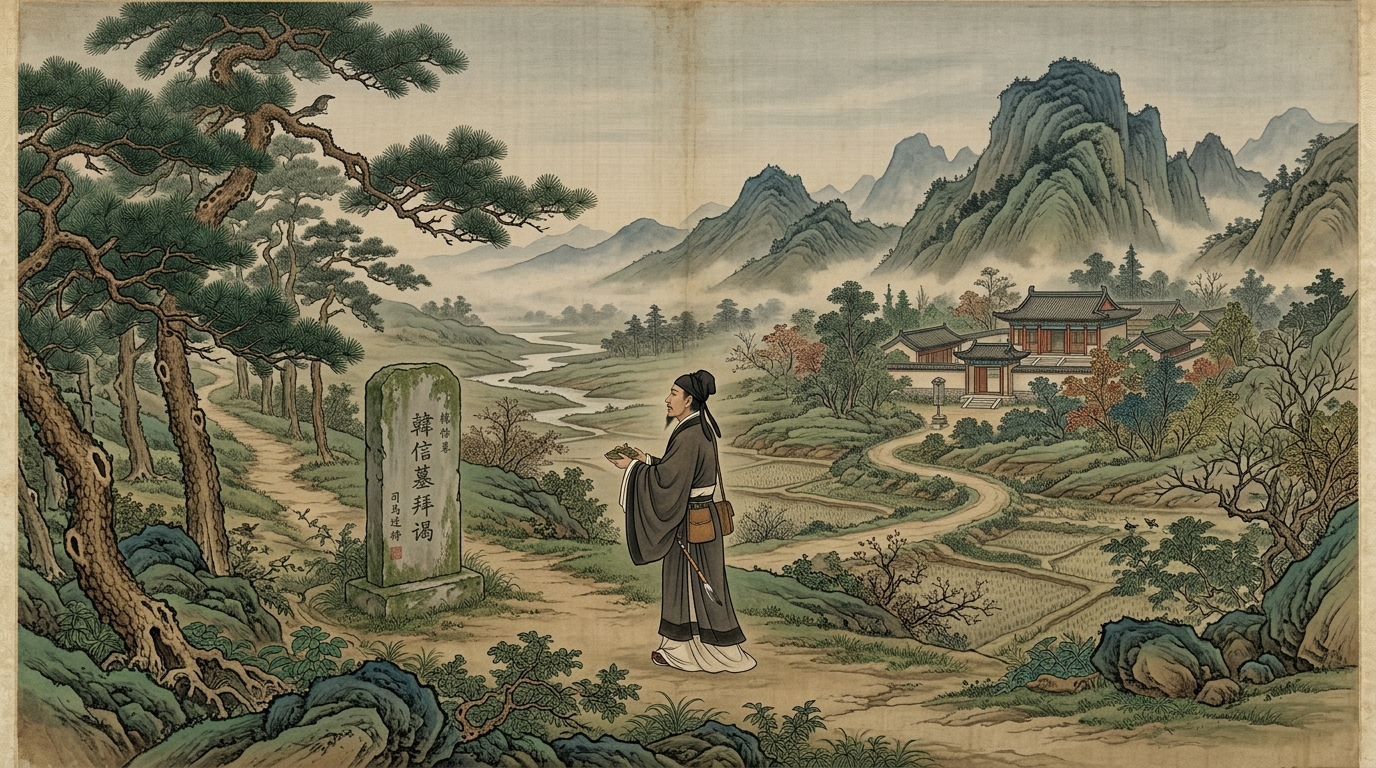
After writing Han Xin’s death, Sima Qian added a journey of his own:
I went to Huaiyin, and the people of Huaiyin told me:
even as a commoner, Han Xin’s aims were not the crowd’s.
When his mother died he was too poor to bury her —
yet he chose for her grave a high, open rise,
with room enough beside it for ten thousand households.
I went and looked at that grave. It is indeed so.
Records of the Grand Historian, Life of the Marquis of Huaiyin — the Grand Historian remarks
- wàn jiā 置万家
- Room for ten thousand guardian households — a tomb imagined at the scale of kings.
Chinese original
吾如淮阴,淮阴人为余言,韩信虽为布衣时,其志与众异。其母死,贫无以葬,然乃行营高敞地,令其旁可置万家。余视其母冢,良然。
A man who could not afford to bury his mother had picked her grave site by asking whether the land beside it could hold ten thousand guardian households. Sima Qian went and looked, and wrote — liáng rán 良然, “it is indeed so.” And he left Han Xin a hypothesis: “Had Han Xin learned the way of humility — had he not boasted of his merits and flaunted his gifts — he might have approached the founders of Zhou, of Shao, of the Grand Duke, and his descendants would have sacrificed at his tomb for generations.” Then the historian steps back down onto three words: shù jī zāi — “he came close.” The step he could not take, he did not take.
Later generations wrote the shrine couplet, ten characters: “His life and death — one true friend. His survival and his end — two women.” The elevation and the bell chamber both turned on the choice of one true friend; the meal that saved him and the plot that destroyed him came from two women. Ten characters for a whole life — the handiwork of later ages,31 not of the historian.
Back to the canyon. The Han Xin of the official story says: “I will repay it a hundredfold!” And he did repay twice: the thousand gold to the washing woman, the office to the butcher’s boy — even the street that laughed at him was settled by one ride home in glory. There was one strike he never threw: Wu She and Kuai Tong handed him the timing, twice, and both times he pressed it back down himself. Every match in the canyon is, in a sense, that strike thrown after all.
Appendix: The Life of Han Xin
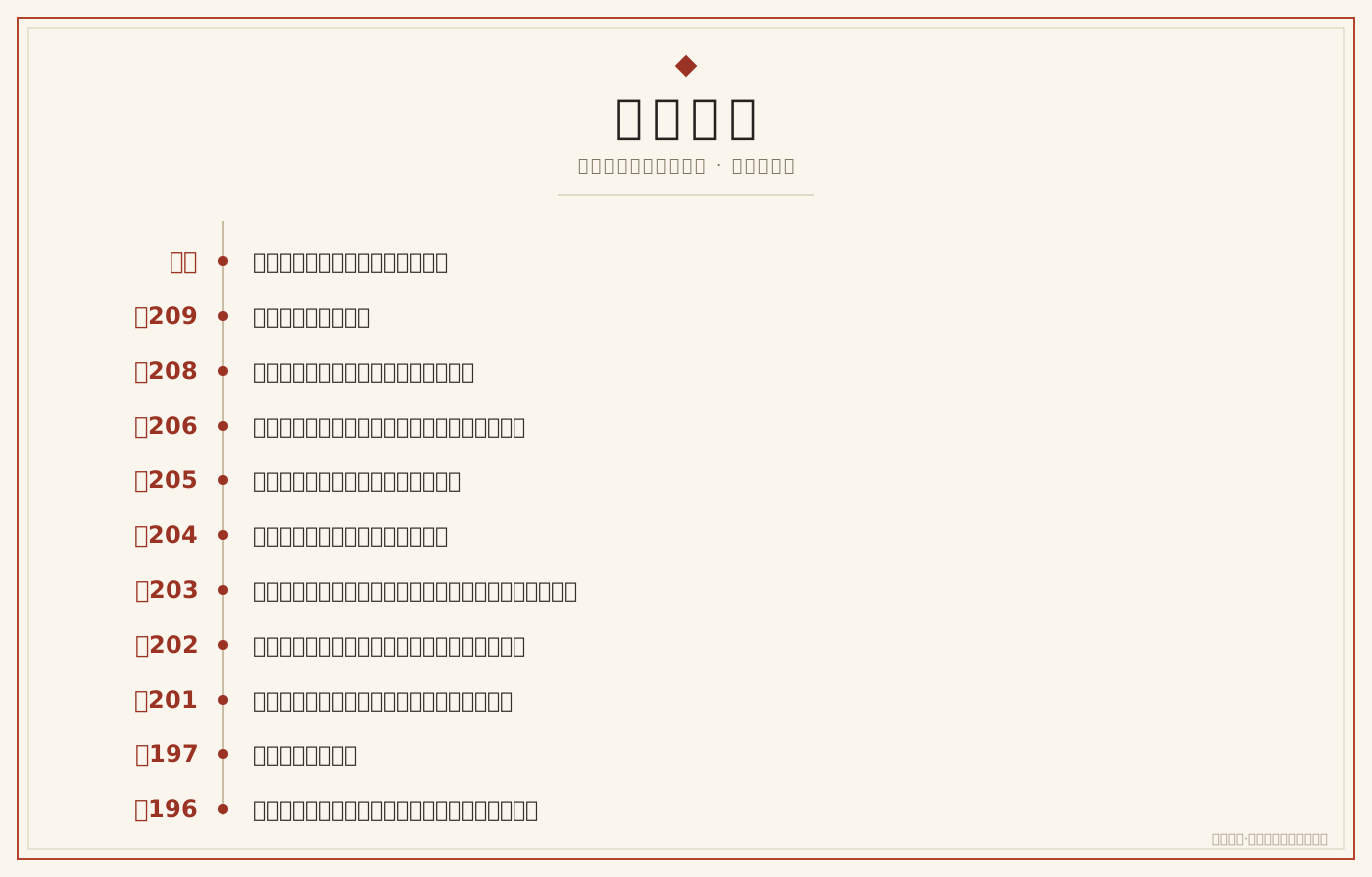
The histories do not record his birth year. From the day he took up the sword to the bell chamber of Changle, fourteen years are on the record:32
Notes
-
Honor of Kings official hero page, Han Xin, “Hero Story” (pvp.qq.com/web201605/herodetail/150.shtml, accessed 2026-10-16). The “remnant of a fallen dynasty,” the betrothed taken as a sacrifice, and the dog’s chain belong to the game’s own fantasy world, not to history. ↩
-
Same page, “The Historical Figure” column (accessed 2026-10-16), quoting the Records of the Grand Historian, Life of the Marquis of Huaiyin: guó shì wú shuāng 国士无双, “peerless in the realm.” ↩
-
Han Xin’s birth year is unknown. This article counts from the first year of the Second Emperor (209 BC), when Xiang Liang crossed the Huai and Han Xin joined the army, to his death in the eleventh year of Han (196 BC): fourteen years in between. ↩
-
“No noted conduct” (wú xíng 无行) means nothing on record worth commending — with the direct consequence that he “could not be recommended for minor office” under Qin’s system of local recommendation. ↩
-
The quoted wording follows the Wikisource text: “He eyed him for a long while, then lowered himself out from between his legs and crawled away.” Fǔ 俛 is fǔ, “to lower.” Standard critical editions read the passage in a slightly different order. ↩
-
Xiang Liang crossed the Huai in the first year of the Second Emperor (209 BC). ↩
-
Langzhong 郎中: a close-quarters guard officer standing halberd watch. Han Xin later told Wu She himself: “My office never rose past langzhong; my post never past halberd-bearer.” ↩
-
Lian’ao 连敖: a junior officer over grain and pay. The Wikisource text writes 连嚣, with a note on excavated texts; this article follows the standard edition’s 连敖. ↩
-
Zhisu duwei 治粟都尉: Supervisor of Grain — a military post in the supply branch, the same service as the lian’ao. ↩
-
Records, original: “An auspicious day was chosen; they fasted, raised an altar, and completed the rites. … The generals were all pleased, each privately believing the Grand General would be himself. Then it was Han Xin — and the whole army was shocked.” ↩
-
Records, original: “The King of Han was overjoyed, and regretted only that he had come to know Xin so late. He followed Xin’s plans and deployed the armies as Xin directed.” ↩
-
“Openly repair the plank roads, secretly cross at Chencang” appears nowhere in the Records; it descends from Yuan-dynasty drama. The Life of the Marquis of Huaiyin gives the reconquest of the Three Qin one line: “In the eighth month the King of Han marched east out of Chencang and settled the Three Qin.” ↩
-
Muying fan 木罂缻: rafts of pottery vessels lashed into wooden frames. In the campaign against Wei Bao, Han Xin feigned a crossing at Pujin while his main force left from Xiayang upstream and struck Anyi, taking Wei Bao alive. ↩
-
Li Yiji (lì yì jī). He had already talked the King of Qi into surrender when Han Xin attacked; the King, believing himself betrayed, boiled Li alive. The Records state it plainly, and later historians have charged Han Xin heavily for taking the credit. ↩
-
The xiáng of “xiáng bù shèng” 详不胜 stands for yáng 佯, “feigned.” Quoted in the Records’ own graph. ↩
-
The request for acting king came in the fourth year of Han (203 BC). ↩
-
“He took off his clothes to clothe me, pushed his food to feed me” — the origin of the idiom jieyi tuishi 解衣推食, “to clothe and feed someone from one’s own share.” ↩
-
The double meaning of bèi 背: the “back” read in physiognomy, and the “back” of betrayal. The pivot of Kuai Tong’s rhetoric. ↩
-
Records, original: “Han Xin wavered, could not bear to turn against Han, and, sure his merit was great, believed Han would never take his Qi, and declined Kuai Tong. Kuai Tong, finding his words unheeded, feigned madness and became a shaman.” ↩
-
The Gaixia array and battle, Basic Annals of Gaozu: “The Marquis of Huaiyin led three hundred thousand and met them head on; General Kong on the left, General Fei on the right, the Emperor behind, with the Marquis of Jiang and General Chai behind the Emperor. Xiang Yu’s soldiers were about a hundred thousand. The Marquis of Huaiyin engaged first, fared badly, and withdrew. Generals Kong and Fei attacked from the wings; the Chu soldiers faltered, and the Marquis of Huaiyin struck again, routing them at Gaixia.” ↩
-
Basic Annals of Xiang Yu: “In the night the Han army was heard singing Chu songs on every side.” Han Xin commanded the van at Gaixia (Life of the Marquis of Huaiyin). The Wu River sequence — the ferryman’s plea, “Heaven destroys me,” the gift of the horse, the fight on foot, the suicide — is quoted from the Basic Annals of Xiang Yu. ↩
-
“Ambush on Ten Sides” is later legend; the Ming-Qing pipa suite of that name plays the Gaixia story. ↩
-
Zhongli Mo, an old general of Xiang Yu’s, long friendly with Han Xin, fled to him after Xiang Yu’s death. Liu Bang demanded him urgently. Han Xin hesitated; Mo said: “If you seize me to flatter Han, I die today — and you follow before the day is out.” He cursed Han Xin as “never a true gentleman” and cut his throat. Han Xin carried the head to Gaozu at Chen, and was bound on the spot. ↩
-
Zhou Bo, Marquis of Jiang, and Guan Ying, Marquis of Yingyin — both original followers of Liu Bang. ↩
-
Fan Kuai, Liu Bang’s brother-in-law, the man who ate a raw pig shoulder at Hongmen. His wife was Empress Lü’s sister. ↩
-
Records, original: “The more, the better — and how was I caught by you?” … “Your Majesty cannot command soldiers, but you command commanders: that is why this servant was caught by Your Majesty. And besides, that was Heaven’s gift, no work of man.” The Wikisource text miswrites 信之 as 言之; this article follows the standard critical edition. ↩
-
The secret pact between Han Xin and Chen Xi appears in the Records only here, in the Life of the Marquis of Huaiyin; later historians have doubted it. This article follows the Records as written. ↩
-
Extermination of three clans: the heaviest collective punishment of Qin-Han law — the father’s, the mother’s and the wife’s clans. ↩
-
The “three exemptions” (no killing under heaven, on earth, or by iron) and the beam, the carpet and the bamboo spear appear nowhere in the Records — which record only “cut down in the bell chamber of Changle.” They descend from later legend and the professional storytellers’ tradition. ↩
-
Hong Mai (Song dynasty), Rongzhai Essays, recording the street saying: chéng yě Xiāo Hé, bài yě Xiāo Hé — “made by Xiao He, undone by Xiao He.” ↩
-
The couplet is attributed to Han Xin’s shrine and tomb; its author is unknown. ↩
-
Dates follow the chronology of the Life of the Marquis of Huaiyin. Qin ran the year from the tenth month, so battles straddling a new year sit slightly offset from Gregorian years. ↩
Sources & further reading
- 《史记》卷九十二 · 淮阴侯列传(维基文库)
引文均核对于此页(2026-10-16),正文以简体转写;异体字与校勘随文注出。
- 王者荣耀官网 · 韩信英雄页(英雄故事与「历史上的TA」栏)
游戏侧事实来源与「国士无双」段左联立绘出处(2026-10-16 查,立绘载于官方腾讯 CDN)。
- 明人画《韩信像轴》(维基共享资源,公有领域)
「国士无双」段右联历史画像出处。
- 《晚笑堂竹庄画传》韩信绣像(维基共享资源,公有领域)
「胯下之耻」节绣像出处(清·上官周绘,1743 年刊)。